
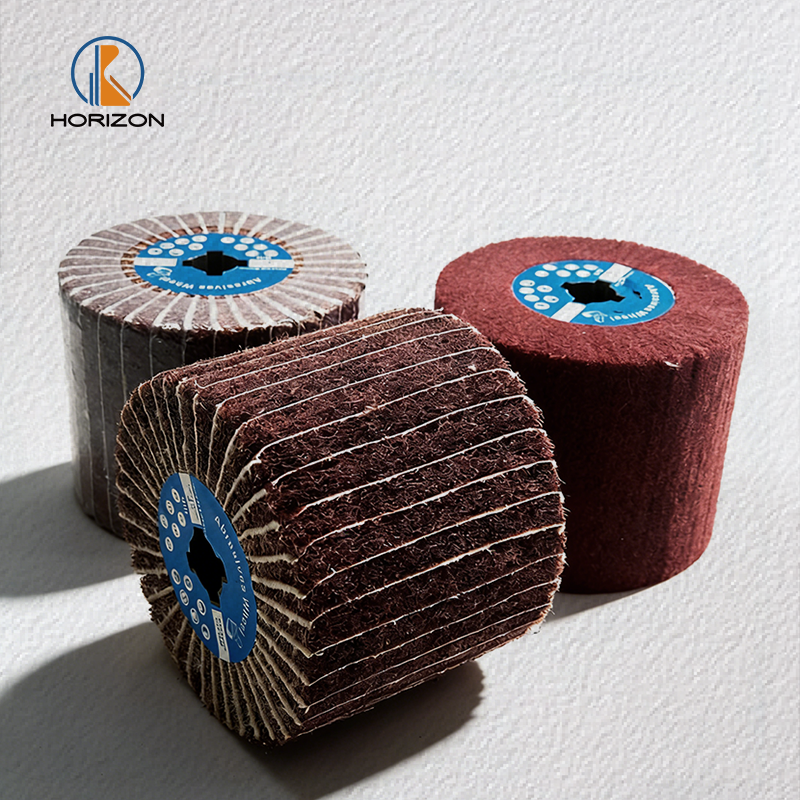
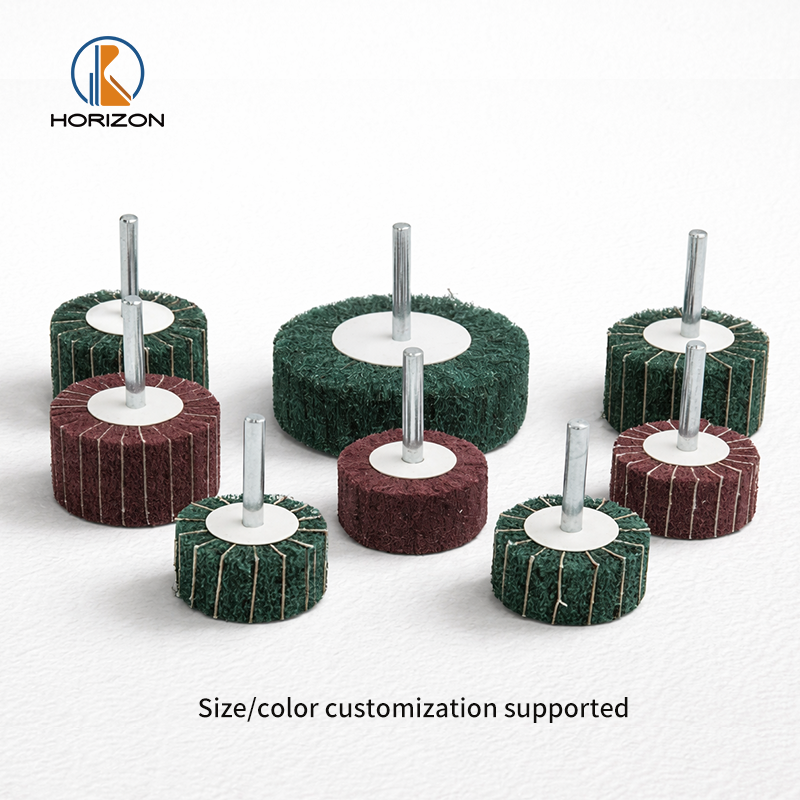
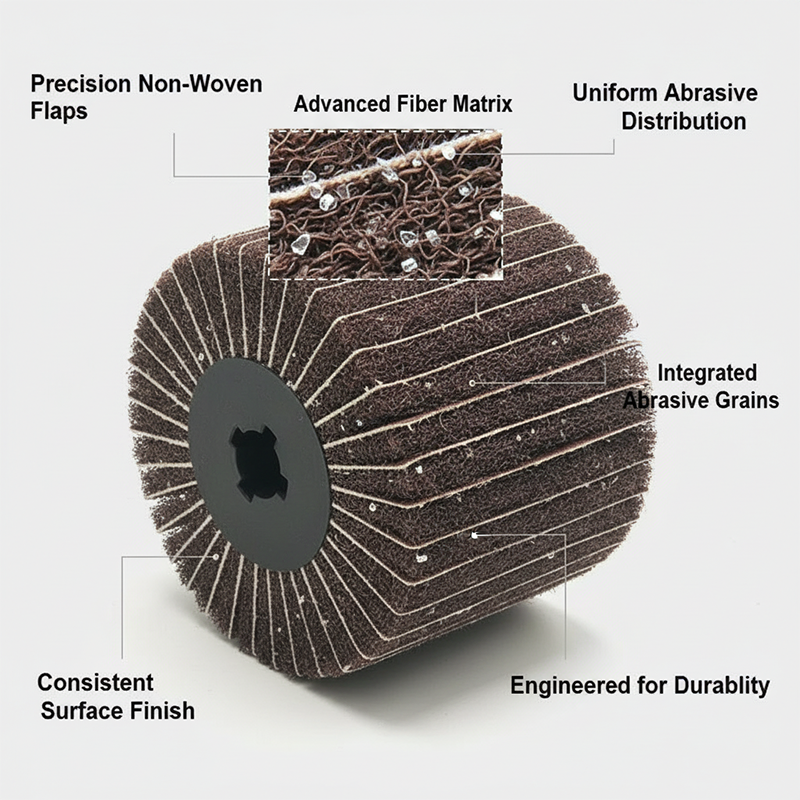
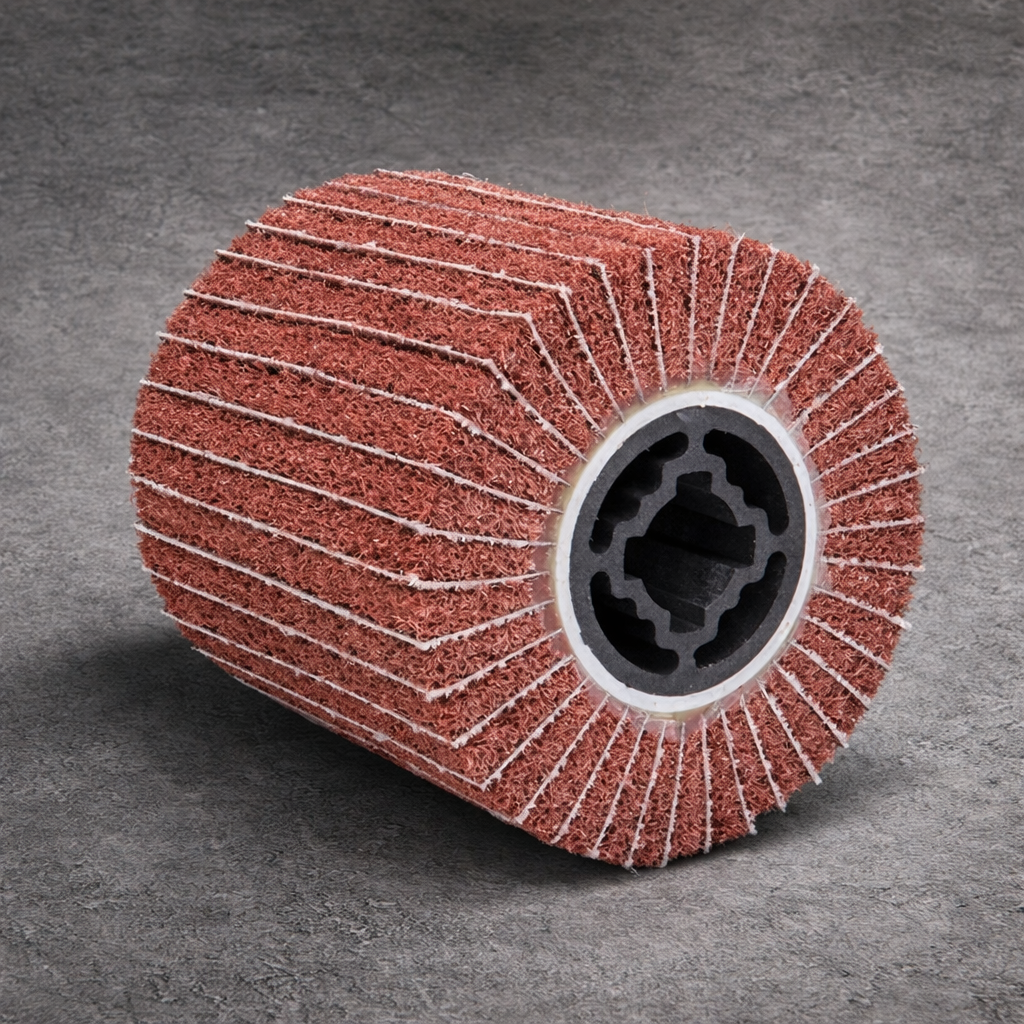
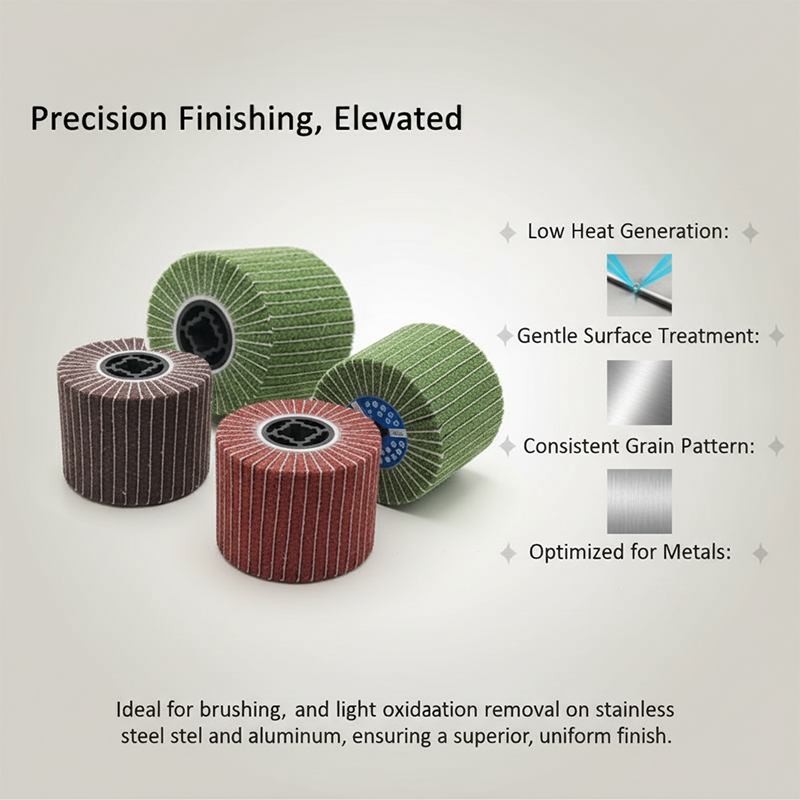
Эти круги выполнены из чередующихся нетканых лепестков (с абразивной пропиткой/покрытием разных классов).Открытая нетканая структура обеспечивает «податливый» контакт, что даёт:
Чередующаяся конструкция сохраняет гибкость и одновременно обеспечивает стабильный непрерывный контакт.
Лепестковые круги с чередующимися неткаными лепестками позиционируются как инструмент для доводки поверхности и формирования текстуры: приоритет — низкий нагрев, низкий риск задиров и стабильная риска при косметической обработке нержавеющей стали, алюминия и декоративных деталей.
Они не рассчитаны на максимальный съём, а на воспроизводимую эстетику поверхности — ключевой расходник для финишных постов и процессов, где внешний вид критичен.
—————————————————————————————————————————————————————————————————————————————————————————-
|
Параметр |
Спецификация |
| Тип продукта |
Лепестковые круги с чередующимися неткаными лепестками |
|
Материал |
Нетканый материал (абразивная пропитка/покрытие) |
| Конструкция |
Чередующаяся лепестковая конструкция |
|
Наружный диаметр |
Наружный диаметр 1,25″–12″ (30–300 мм) (возможно расширение) |
| Ширина |
Ширина 3/8″–8″ (10–200 мм) (возможно расширение) |
|
Посадочное отверстие |
Посадочное отверстие 1/4″–2″ (на заказ) |
| Класс (градация) |
Грубый/Средний/Тонкий (C/M/F) (возможно расширение) |
|
Макс. об/мин (Max RPM) |
Маркировка по размеру и стандарту |
—————————————————————————————————————————————————————————————————————————————————————————-
—————————————————————————————————————————————————————————————————————————————————————————-
—————————————————————————————————————————————————————————————————————————————————————————-
—————————————————————————————————————————————————————————————————————————————————————————-
|
Сравнение |
Нетканые круги с чередующимися слоями | Обычные лепестковые круги | Нетканые круги для обработки поверхности |
| Способность к съёму материала | Низкий–средний | Высокая |
Низкая |
|
Стабильность текстуры |
Отличный | Среднее–хорошее | Отличный |
| Риск перегрева/побежалости | Низкая | Средний |
Низкая |
|
Риск задиров |
Низкая | Средний | Низкая |
| Типичное применение | сатинирование/блендинг | съём/сварка |
доводка/очистка |
—————————————————————————————————————————————————————————————————————————————————————————-
—————————————————————————————————————————————————————————————————————————————————————————-
—————————————————————————————————————————————————————————————————————————————————————————-
OEM/ODM: плотность/класс нетканого материала, система абразивной пропитки, OD/ширина/посадка, доля чередования и жёсткость, материал сердечника и класс балансировки, private label/упаковка и наборы — инженерно под целевую текстуру (направление, грубость, глянец) и материал.
—————————————————————————————————————————————————————————————————————————————————————————-
Косметические детали требуют стабильности партий: плотность нетканого материала, стабильность класса и балансировка круга определяют равномерность текстуры, тепловое поведение и риск «полос».Мы контролируем материалы и конструкцию, чтобы финиш по внешнему виду был воспроизводимым.
—————————————————————————————————————————————————————————————————————————————————————————-
Работайте со средним–низким прижимом, стабильной скоростью и постоянным движением, чтобы не уплотнять нетканый слой и не получать неравномерную текстуру
Для косметической обработки нержавейки: сначала снимите усиление шва/заусенцы лепестковыми дисками/лентами, затем используйте нетканые круги для блендинга/сатинирования
Храните в сухом месте в тени; влага снижает упругость нетканого материала и стабильность класса; после вскрытия повторно герметизируйте упаковку