
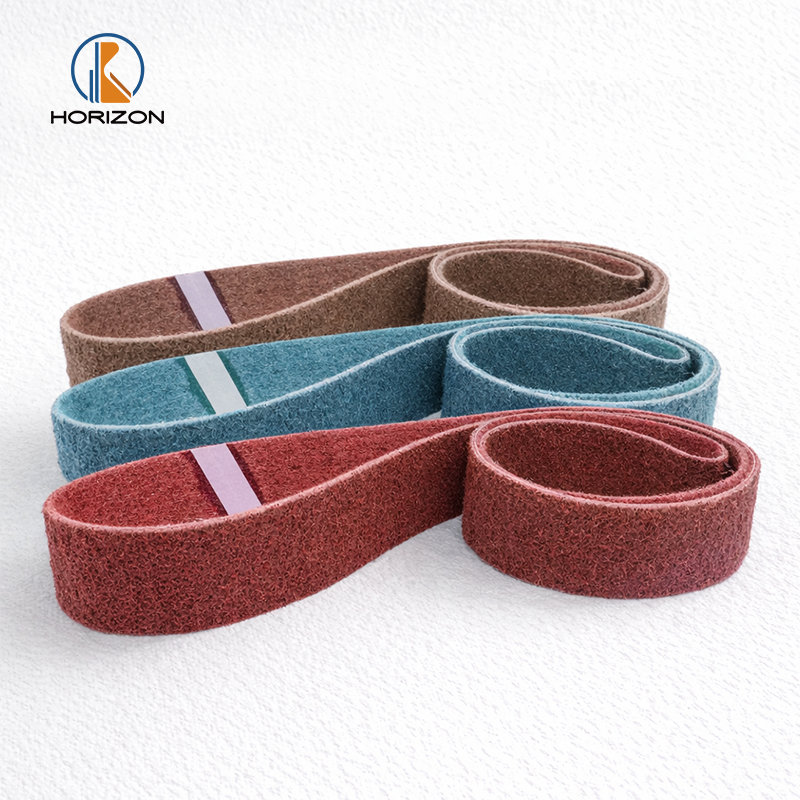
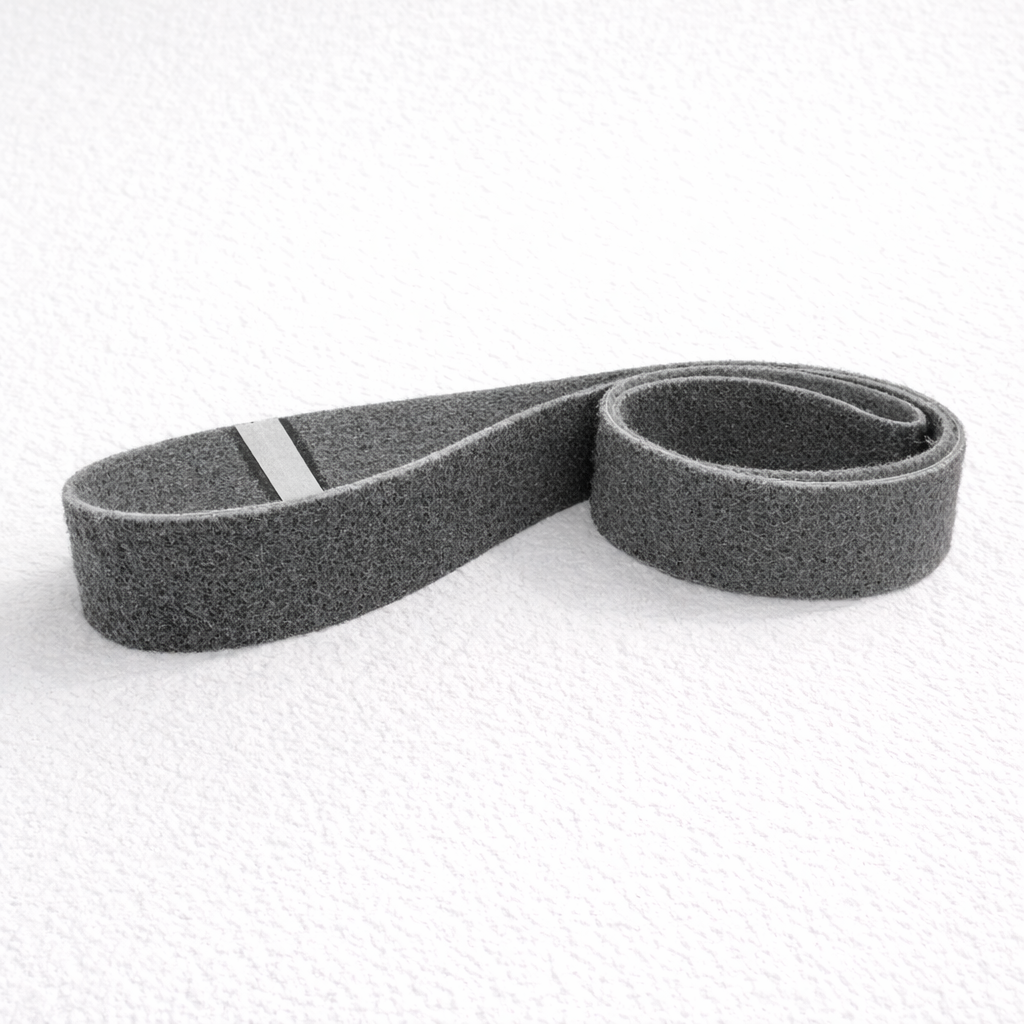
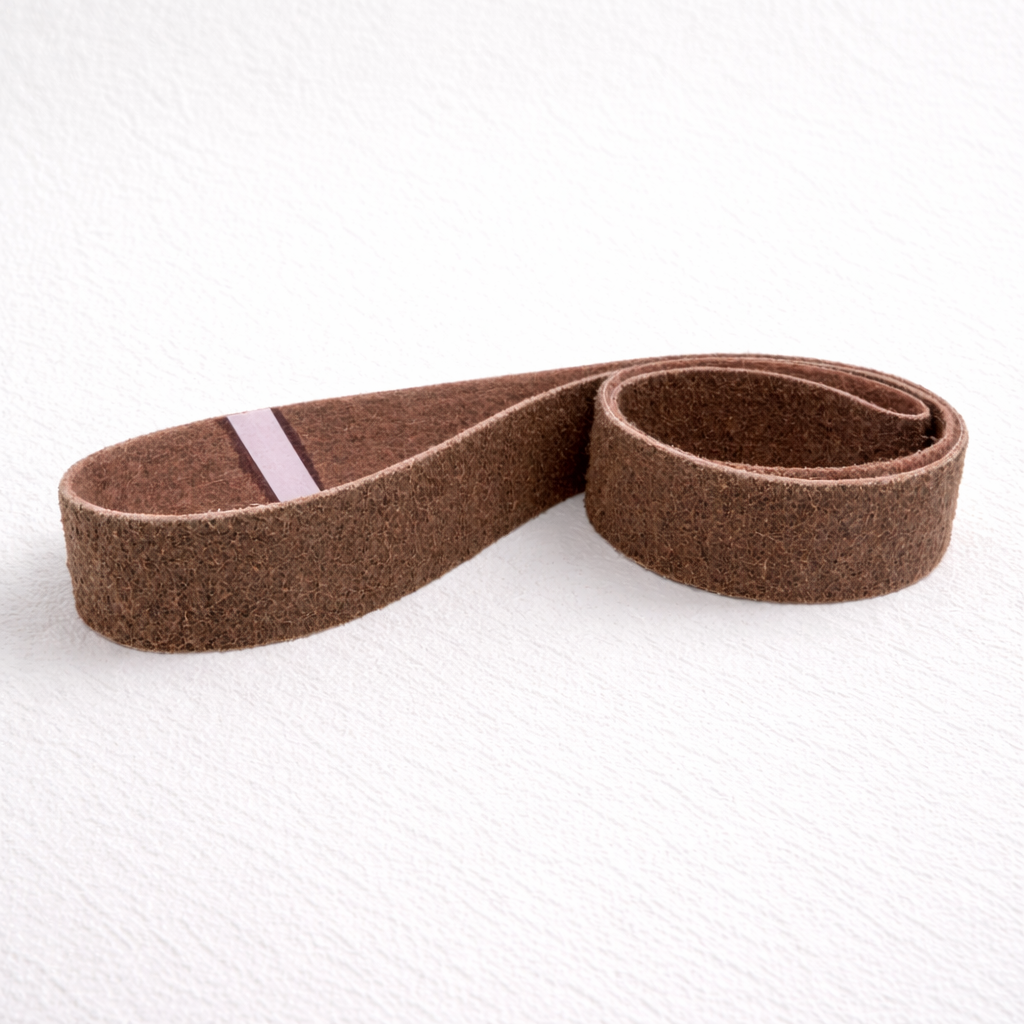
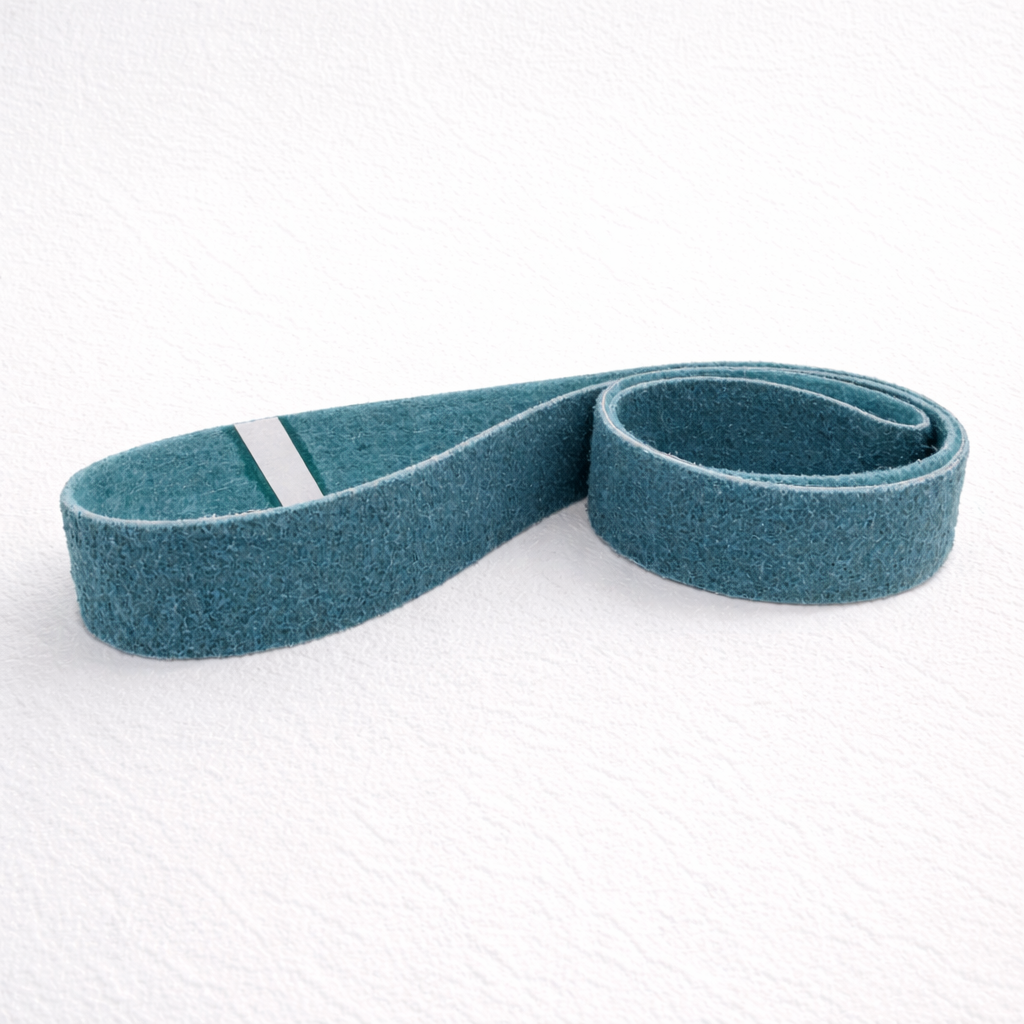
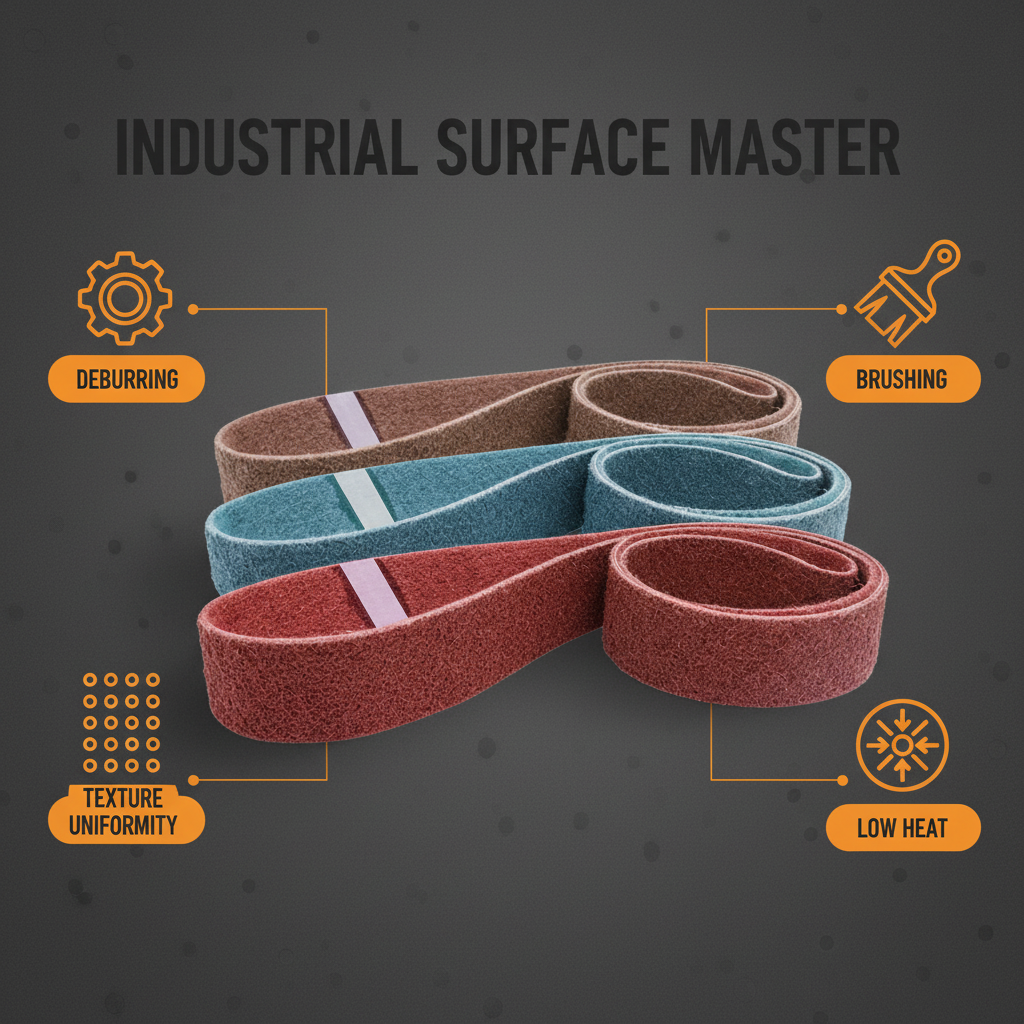
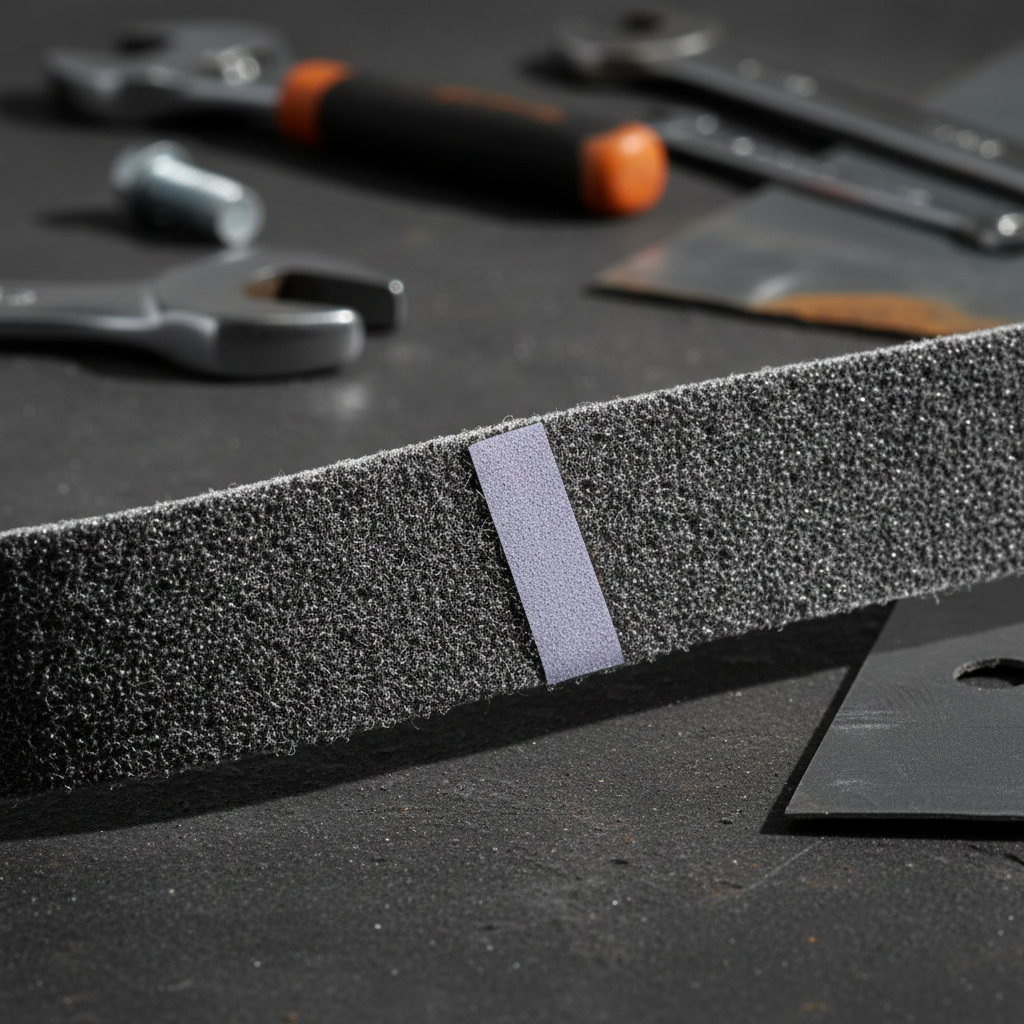
Открытая волоконная структура нетканых лент снижает тепловыделение и засаливание, обеспечивая стабильный финиш при длительной работе.
Результат финиширования в большей степени определяется взаимодействием «волокно–абразив», а не агрессивным резанием зерном.
|
Параметр |
Спецификация |
| Материал |
Нетканое волокно, пропитанное абразивом |
|
Класс (градация) |
Грубая / средняя / тонкая (C / M / F) |
| Тип абразива |
Абразив: оксид алюминия (AO) / карбид кремния (SiC) |
|
Основа |
С армирующей сеткой (scrim) / облегчённая основа / без основы |
| Тип стыка (соединения) |
Стык встык |
|
Размеры |
Размеры на заказ |
————————————————————————————————————————————————————————————————————————————————————
Нетканые шлифовальные ленты — это абразивы для обработки поверхности на основе открытого волоконного полотна. Они применяются главным образом для удаления заусенцев, скругления кромок, блендинга и формирования текстуры, а не для интенсивного съёма материала.
————————————————————————————————————————————————————————————————————————————————————
————————————————————————————————————————————————————————————————————————————————————
Нетканые ленты обрабатывают поверхность за счёт многоточечного контакта при низком удельном давлении: они скорее «рафинируют» поверхность, чем режут материал, сохраняя размерную точность.
————————————————————————————————————————————————————————————————————————————————————
————————————————————————————————————————————————————————————————————————————————————
|
Сравнение |
Нетканые шлифовальные ленты | Шлифовальные ленты с абразивным покрытием |
| Процесс | Обработка поверхности (conditioning) |
Резание (съём материала) |
|
Контроль тепла |
Отличный | Умеренный |
| Стабильность финиша | ★★★★★ |
★★★ |
|
Съём материала |
Минимальное | Минимальное |
| Влияние на размеры | Очень низкое |
Выше |
————————————————————————————————————————————————————————————————————————————————————
————————————————————————————————————————————————————————————————————————————————————
————————————————————————————————————————————————————————————————————————————————————
Мы предлагаем OEM/ODM-кастомизацию по плотности нетканого полотна, типу абразива, сочетанию градаций и размерам ленты — под требуемый финиш поверхности.
————————————————————————————————————————————————————————————————————————————————————
Благодаря контролируемой структуре волокон и отработанным процессам производства мы обеспечиваем предсказуемые решения по обработке поверхности с низкими рисками.
————————————————————————————————————————————————————————————————————————————————————