
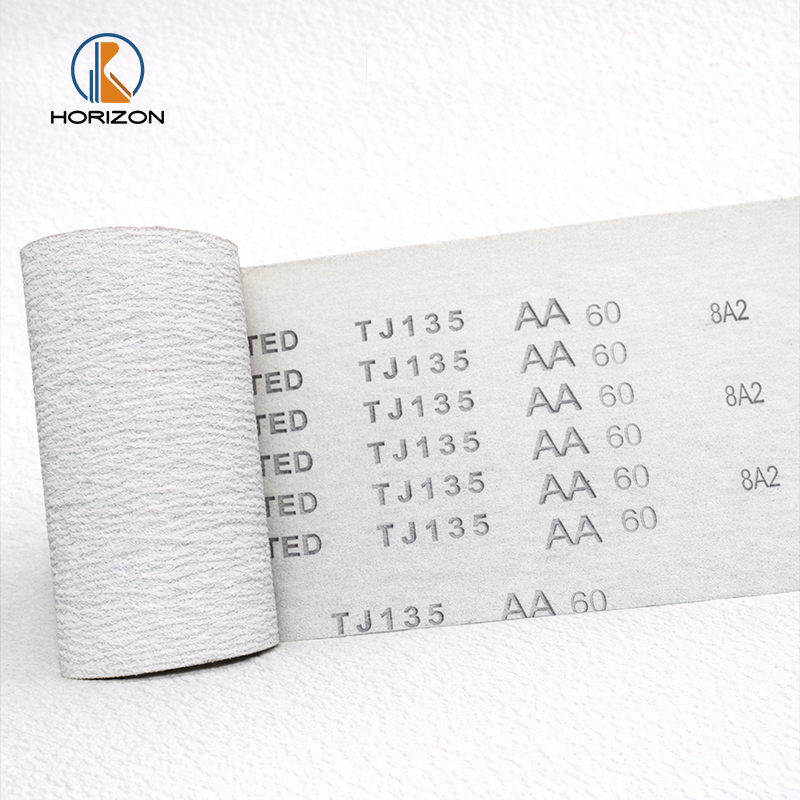
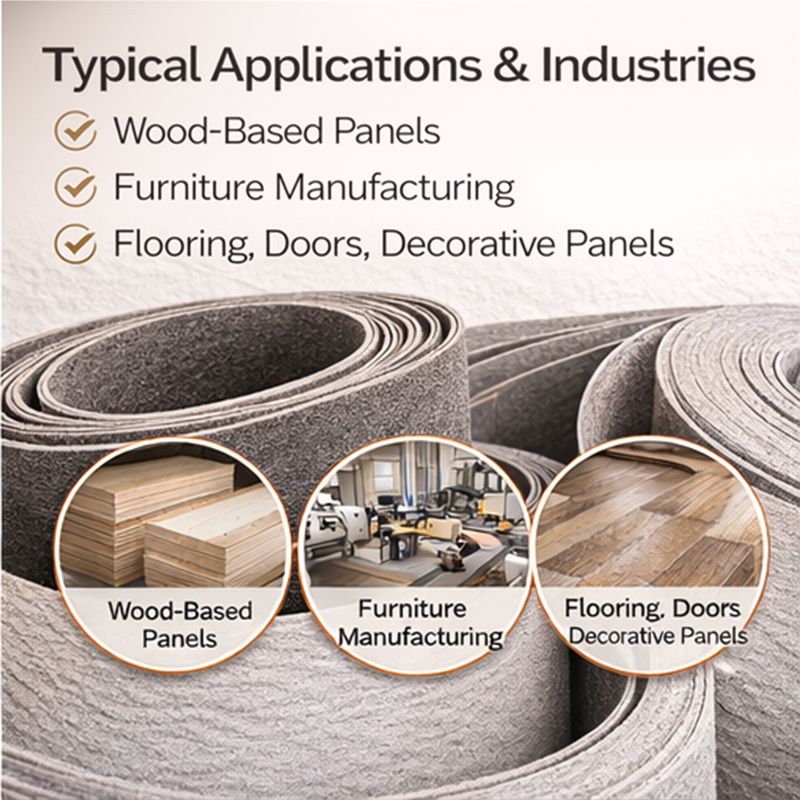
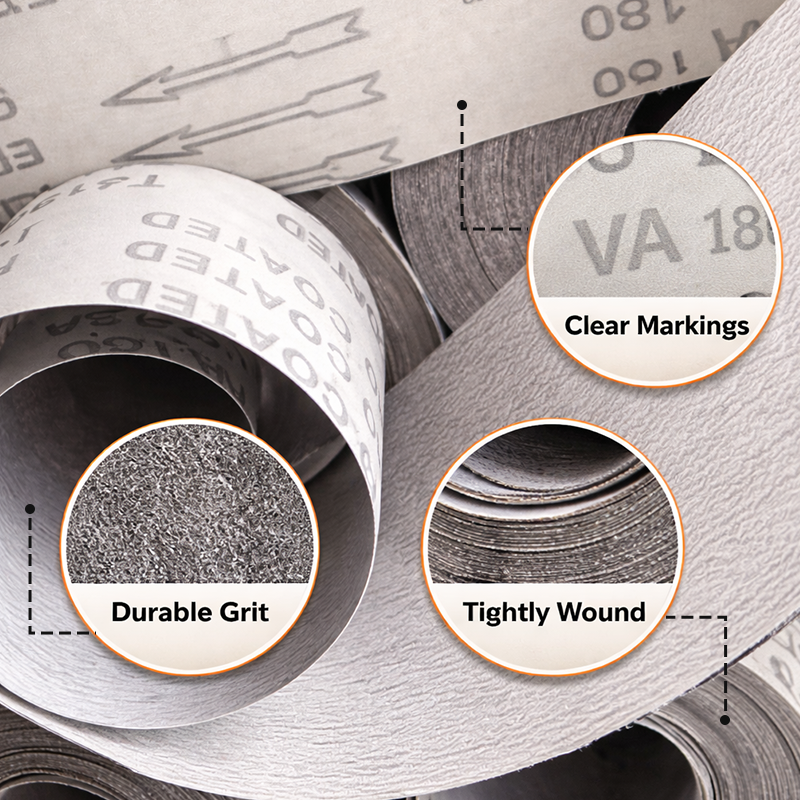
Тяжёлые бумажные ленты используют усиленную плотную бумажную основу в сочетании с равномерным абразивным покрытием, сохраняя стабильную геометрию при работе на широколенточных станках.
Предсказуемый износ и стабильная структура риски делают их оптимальными для начальных и промежуточных этапов шлифования.
Ленты на тяжёлой бумажной основе позиционируются как абразивы с приоритетом плоскостности для широколенточных шлифсистем.
Вместо экстремальной прочности на растяжение или агрессивного съёма они ориентированы на стабильный контакт и равномерность поверхности на больших площадях.
————————————————————————————————————————————————————————————————————————————————————
|
Параметр |
Спецификация |
| Абразив |
Абразив: оксид алюминия (AO) / карбид кремния (SiC) |
|
Основа |
Усиленная бумажная основа (E-weight / F-weight / G-weight) |
| Диапазон зернистости |
P40–P240 |
|
Тип стыка (соединения) |
Стык встык |
| Связка |
Полная смоляная связка |
|
Размеры |
Размеры на заказ |
————————————————————————————————————————————————————————————————————————————————————
В широколенточной шлифовке качество поверхности больше зависит от стабильности контакта, чем от пикового режущего усилия.
Тяжёлая бумажная основа формирует стабильный контакт, снижая волнистость, виброриски (chatter marks) и локальный переразъём (перешлифовку).
————————————————————————————————————————————————————————————————————————————————————
————————————————————————————————————————————————————————————————————————————————————
————————————————————————————————————————————————————————————————————————————————————
|
Сравнение |
Ленты на усиленной бумажной основе | Ленты на тканевой основе |
| Плоскостность | ★★★★★ |
★★★★ |
|
Стабильность контакта |
★★★★★ | ★★★★ |
| Стойкость к натяжению | Средний |
Высокая |
|
Типичное применение |
Шлифовка панелей | Универсальная шлифовка |
| Экономическая эффективность | Высокая |
Средний |
————————————————————————————————————————————————————————————————————————————————————
————————————————————————————————————————————————————————————————————————————————————
————————————————————————————————————————————————————————————————————————————————————
Доступна OEM/ODM-кастомизация с учётом параметров широколенточного станка, материала панелей и требуемой производительности линии.
————————————————————————————————————————————————————————————————————————————————————
Как производитель, мы контролируем прочность бумажной основы, равномерность нанесения покрытия и стабильность партий, обеспечивая надёжную работу в производственных условиях.
————————————————————————————————————————————————————————————————————————————————————