
+86 18152098328

Wood Cutting Blades (TCT)

Wood Cutting Blades (TCT)

Product Overview

Steel plate + carbide tips + geometry/tooth count/kerf as a system—where “fast” and “clean” can coexist
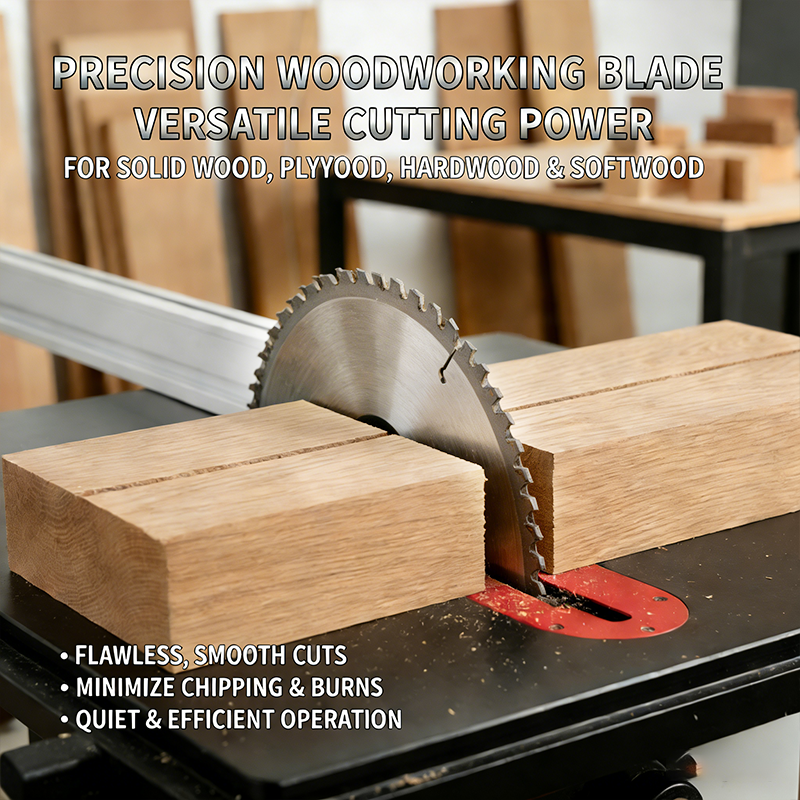
TCT circular saw blade solutions for ripping and crosscutting—engineered for repeatable balance of speed, finish quality and blade life

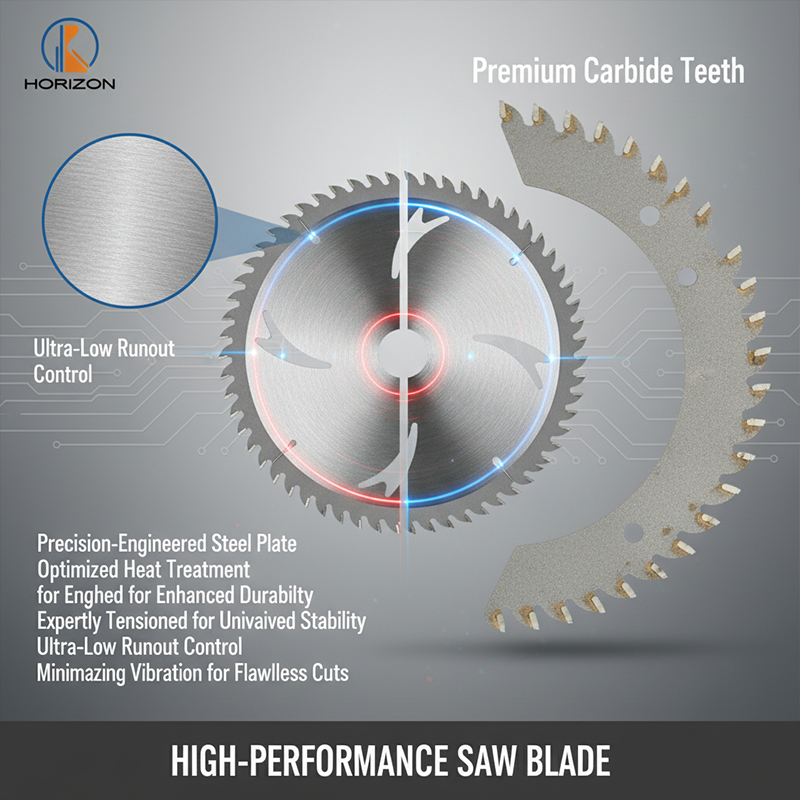
Blade performance is driven by three engineering layers:

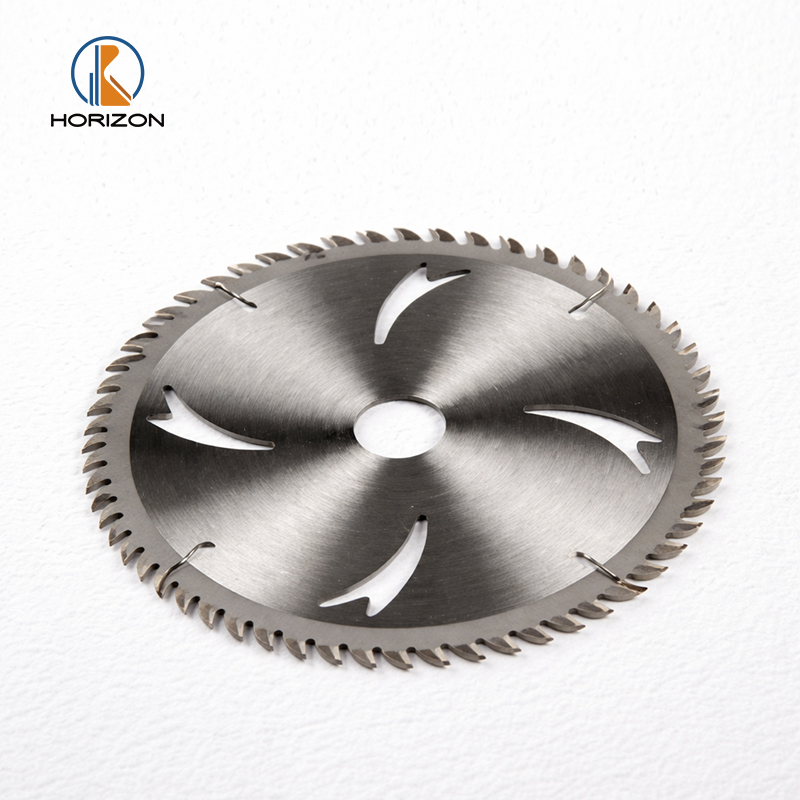
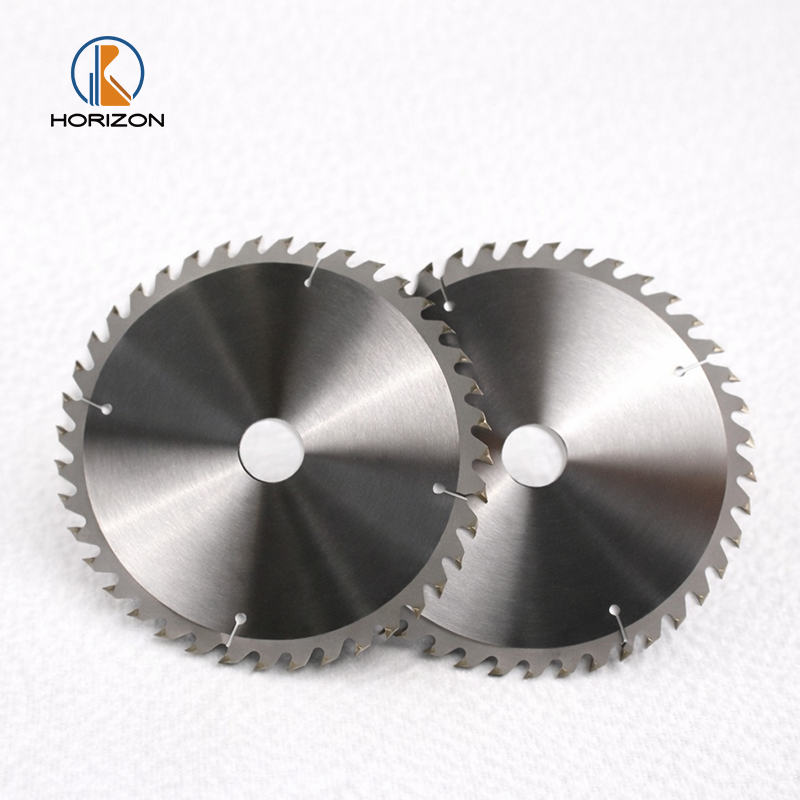
  • Plate/body: steel/heat treatment, tensioning, and runout control define high-speed stability and vibration resistance;
  • Carbide tips: grade and brazing quality define wear resistance, chip resistance, and re-sharpenability;
  • Geometry: tooth form (ATB/FTG/Combo, expandable to TCG), tooth count, hook/clearance angles, and kerf define load, chip evacuation, finish quality, and heat generation.

That’s why blades with identical diameter/tooth count can behave very differently—the real gap is stability and consistency.

Product Description

Product Positioning

 Result-driven cutting tool for woodworking—built for throughput, visible-edge finish and batch consistency

Wood cutting blades (TCT) are key cutting tools that convert variability—from material, machine, and operator—into controlled, repeatable results. For procurement and process owners, blades are not just consumables; they influence takt time, rework rate, yield, and operator experience (noise/dust).
This series targets common wood materials (solid wood, plywood, finger-joint boards, soft/hard woods) with priorities on clean cuts, reduced chipping/burrs/burn marks, and longer sharpening intervals.


—————————————————————————————————————————————————————————————————————————————————————————-

Technical Specifications

Define a wood blade by six factors: diameter, bore, tooth count, geometry, kerf and plate stability

Specification

Notes
Diameter

110–450 mm typical (depending on equipment platform)

Bore/Arbor

20 / 22.23 / 25.4 / 30 mm (bushings available)
Tooth Count

18T–120T (application dependent)

Tooth Geometry

ATB / FTG / Combo (TCG available for sheet goods)
Hook Angle

Low / Mid / High (affects feed rate and pull tendency)

Kerf

Thin Kerf / Standard Kerf (balances power vs. stability)
Plate Thickness

Interlinked with kerf (trade-off between stability & energy)

Runout

Lower is better for cut quality and tool life (Critical QC item)
Noise & Vibration

Laser-cut silencing slots / Expansion slots (Optional)

Max RPM

Rated by diameter and design (Must match equipment)


—————————————————————————————————————————————————————————————————————————————————————————-

Key Features

Cleaner cuts, controlled heat, stable life and predictable sharpening cycles
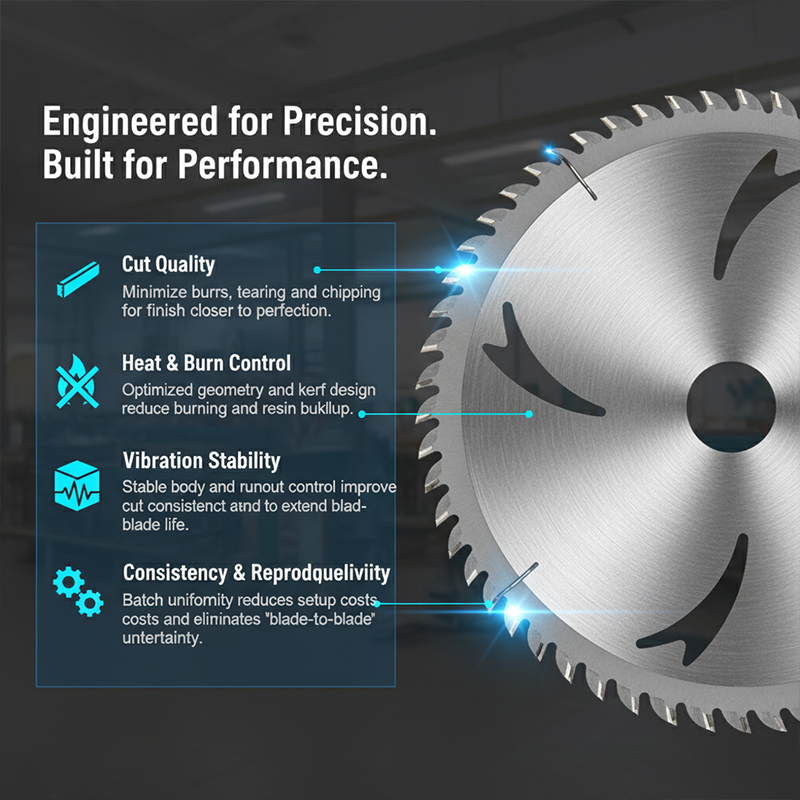
  • Finish quality: reduced burrs, tear-out, and edge chipping for visible-edge applications;
  • Heat control: geometry/kerf paired with feed strategy to reduce burning and resin build-up;
  • Stability: plate stability and runout control improve cut pattern consistency and tip life;
  • Repeatability: consistent batches reduce setup time and the “same spec, different performance” issue.


—————————————————————————————————————————————————————————————————————————————————————————-

Processing Logic

Define the goal first (rip vs finish), allocate load via geometry/tooth count, then secure results with kerf and stability

Wood cutting trades off throughput vs heat/tear-out risk. Fine finishing uses higher tooth count but changes load and noise behavior. Engineering control comes from:

  • Geometry: ATB favors clean crosscuts; FTG favors ripping and chip evacuation; Combo balances;
  • Tooth count: fewer teeth = higher chip load per tooth (fast but rougher); more teeth = lower chip load (finer but needs stability);
  • Kerf & plate stability: thin kerf reduces power demand but needs stable setups; standard kerf offers robustness at higher energy cost.


—————————————————————————————————————————————————————————————————————————————————————————-

Machine Compatibility

Machine type sets the stability threshold—handheld needs smooth control, table saws need runout/straightness, lines need life & sharpening cadence
  • Handheld circular saws: thin kerf and low vibration for smoother control and reduced kickback tendency;
  • Miter/table/panel saws: plate stability and low runout for consistent edges;
  • Production stations: focus on predictable life and re-sharpenability to manage tool-change intervals.


—————————————————————————————————————————————————————————————————————————————————————————-

Engineering Comparison

Geometry Comparison:

Wrong geometry/tooth count often looks like “material issues” but is a tool-match problem

  • ATB: cleaner crosscuts, reduced tear-out for visible edges;
  • FTG: efficient ripping with strong chip evacuation;
  • Combo: general-purpose choice for broad applications.
Thin Kerf vs Standard Kerf

Thin kerf reduces power demand but needs stable setups; standard kerf is more forgiving with higher cutting resistance.


—————————————————————————————————————————————————————————————————————————————————————————-

Typical Applications & Industries

From panels to solid wood—ripping, crosscutting, finish cutting and pre-cutting before assembly
  • Furniture, Cabinetry, Doors
  • Windows components, Pallets
  • Crates, Interior carpentry, and Wood
  • Panel processing


—————————————————————————————————————————————————————————————————————————————————————————-

Range & Recommended Use

Select by goal–material–machine–finish requirement, not tooth count alone
  • Ripping/throughput: FTG or lower tooth count for chip evacuation;
  • Visible-edge finish: ATB or higher tooth count for cleaner cuts;
  • General purpose: Combo reduces mismatch and claims;
  • Resinous woods: manage feed/RPM and choose designs that evacuate chips and reduce heat.
  • One-line rule: Task first → geometry/tooth count → kerf based on machine stability.


—————————————————————————————————————————————————————————————————————————————————————————-

Customization (OEM/ODM)

Full OEM/ODM—from specs and geometry to noise-control design and private label packaging

OEM/ODM supported:

Diameter, bore, tooth count, geometry, hook angle, kerf, plate thickness, noise-control slots/plugs, coatings (if required), printing/private label packaging, barcodes and assortment kits.


—————————————————————————————————————————————————————————————————————————————————————————-

Why Choose Us

Reduce claims with repeatability—stable supply, clear selection rules and standardized assortments

We focus on assortments and repeatability: practical selection rules reduce mismatch/returns, while consistent batches and reliable delivery reduce setup and complaint costs. Saw blades can also complement your abrasives portfolio to support a one-stop “cut + finish” offering.


—————————————————————————————————————————————————————————————————————————————————————————-

Usage & Storage Recommendations

Correct mounting and feed rate often matter more than a higher-priced blade
  • Mounting: ensure bore fit, clean clamping faces, intact flanges; guard on; never exceed RPM rating;
  • Feed: avoid forcing the cut—heat causes burning; adjust feed/RPM/blade match first;
  • Maintenance: re-sharpen/replace when dull to prevent plate deformation;
  • Storage/shipping: keep dry; protect teeth; avoid compression and impact.

Product Ralated

RU