
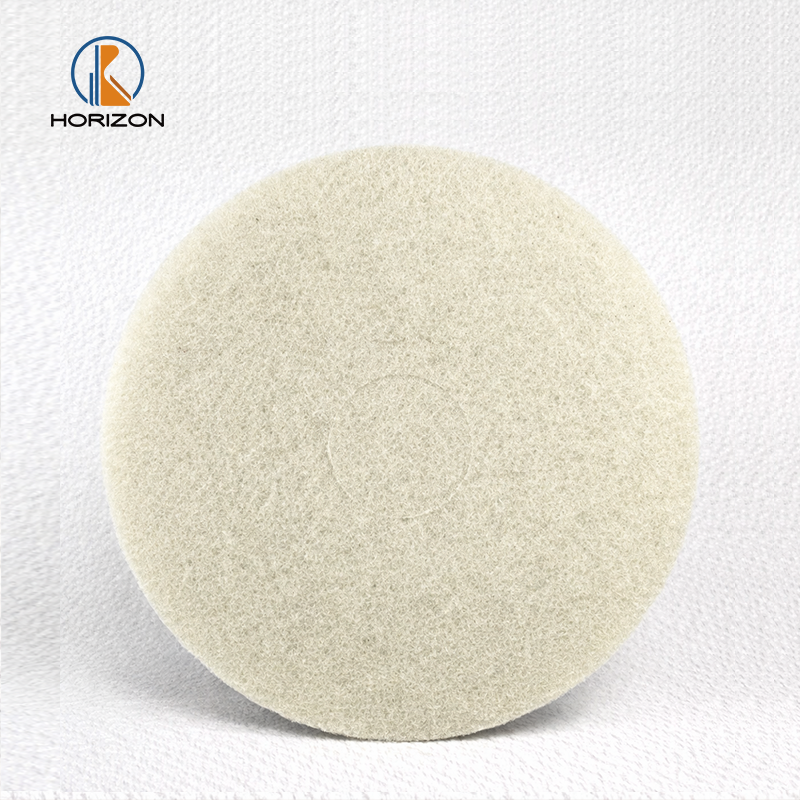
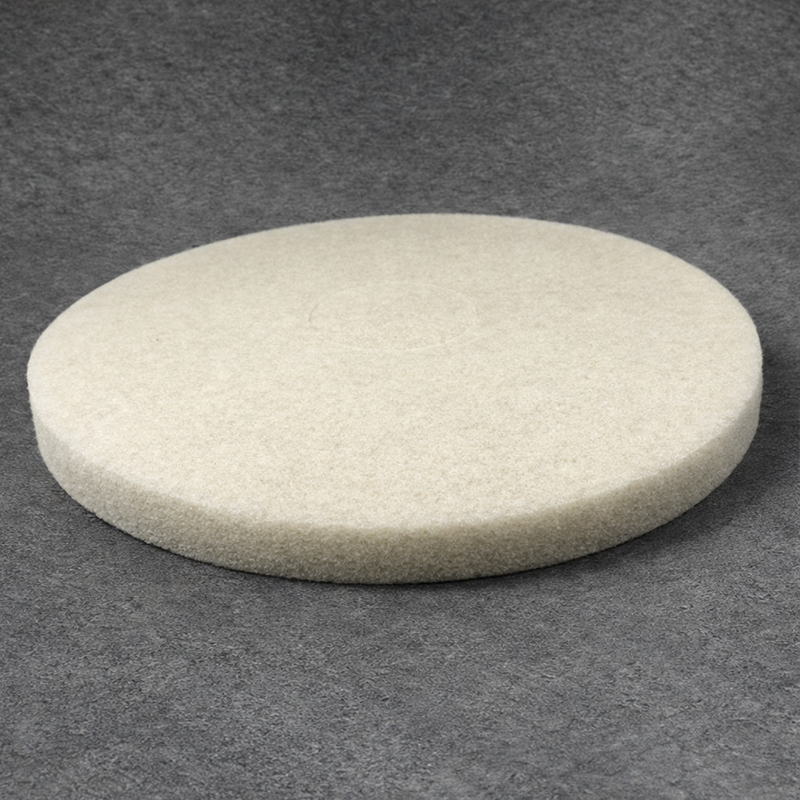
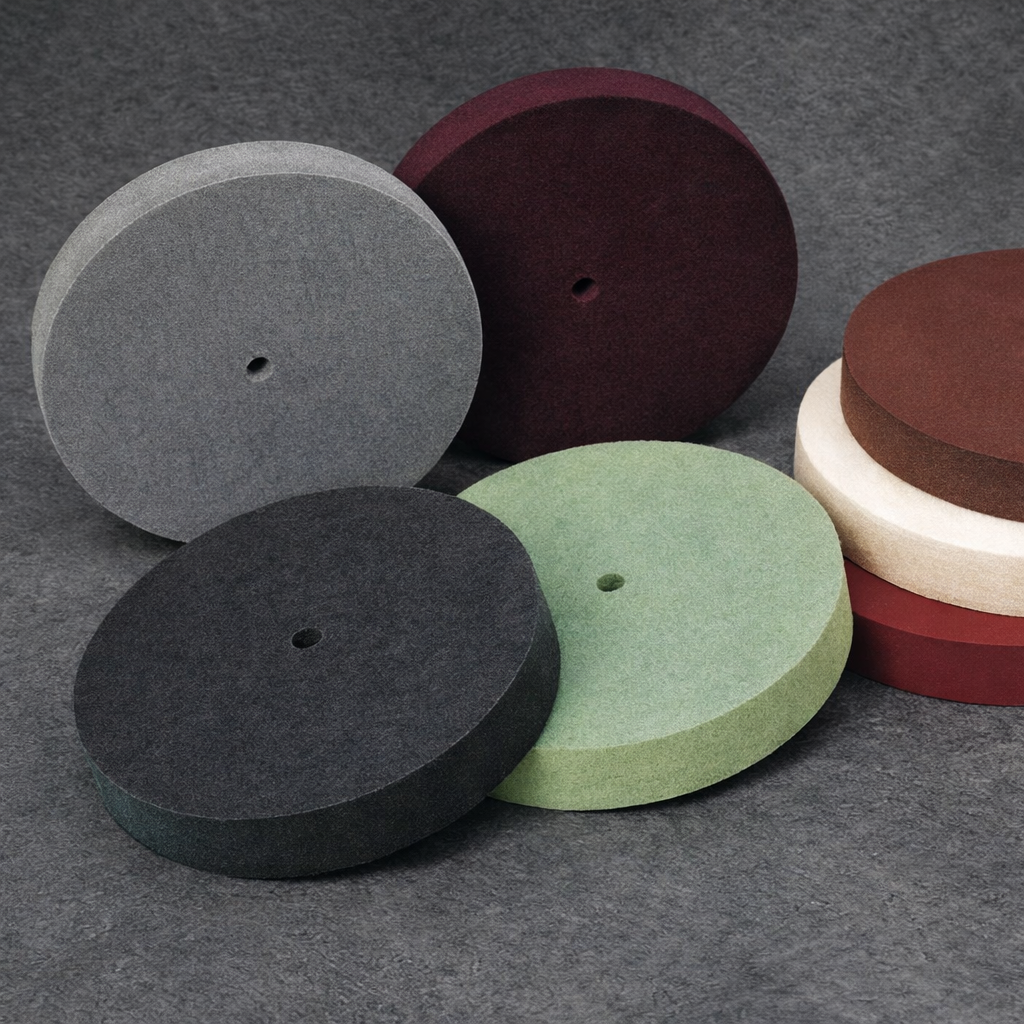
Nonwoven polishing pads use an open-web fiber structure, engineered by density/thickness and optionally abrasive systems (or pure wiping/buff grades). Key advantages include:
Formats include discs, sheets, rolls, and bonnet-style pads for large-area finishing wipe-down.
Nonwoven polishing pads are positioned as refinement and finishing consumables in polishing systems, valued for low heat, low micro-marring risk, and more stable surface output. They are widely used on metals (stainless/aluminum/copper) and coating/paint systems for polishing transitions, light refinement, mild film removal, and finishing—especially where cosmetic consistency and rework reduction matter.
Compared with Item 33 (foam/wool/microfiber pads) focused on correction/cut, nonwoven polishing pads focus on surface-state control, stabilizing reflection and feel by reducing haze and finish variability.
————————————————————————————————————————————————————————————————————————————————————
|
Item |
Specification |
| Type |
Nonwoven polishing pads |
|
Format |
Discs / Sheets / Rolls / Bonnets |
| Diameter |
3″ / 4″ / 5″ / 6″ / 7″ (Extendable) |
|
Thickness |
Custom thickness (Thin/Standard/Thick) |
| Attachment |
Hook & loop / PSA / Laminated back |
|
Grade |
Coarse / Medium / Fine / Very Fine |
| Abrasive |
Pure nonwoven / AO / SiC options |
|
Density |
Low/Medium/High (Customizable) |
| Max RPM |
Rated per spec (Never overspeed) |
————————————————————————————————————————————————————————————————————————————————————
————————————————————————————————————————————————————————————————————————————————————
The goal is not maximum removal, but:
Best placed in the finishing stage after correction/refinement, not for heavy defect removal.
————————————————————————————————————————————————————————————————————————————————————
—————————————————————————————————————————————————————————————————————————————————————————-
|
Dimension |
Nonwoven Polishing Pads | Foam Pads | Polishing Cloth |
| Core role | Blending / Haze control / Low-heat finishing | Graded cutting & finishing |
Residue removal & Final presentation |
|
Removal |
Low to Medium | Medium (Adjustable) | Minimal / Extremely low |
| Gloss consistency | ★★★★★ | ★★★★★ |
★★★★★(取决于表面状态) |
|
Micro-marring risk |
Low | Low to Mid (Depends on grade) | Low (Cleanliness is critical) |
| Typical stage | Post-refinement / Finishing | Correction – Refinement – Glossing |
Final wipe-down |
————————————————————————————————————————————————————————————————————————————————————
Stainless cosmetics: haze control after refinement, improved reflection uniformity, mild film handling
Aluminum/copper: polish transition and final homogenization
Automotive paint/clearcoat: finishing after polishing to reduce haze and smearing
Industrial coatings: light refinement and appearance consistency improvement
————————————————————————————————————————————————————————————————————————————————————
————————————————————————————————————————————————————————————————————————————————————
OEM/ODM supported:
Density/thickness, grade system (coarse–very fine), abrasive-impregnated or pure nonwoven, sizes and formats (discs/bonnets/sheets/rolls), backing options (hook & loop/PSA/laminated), color coding, packaging and private label kits (paired with polishing pads and cloths as refine–finish–inspect sets).
————————————————————————————————————————————————————————————————————————————————————
Differentiation lies in finish stability:
Density consistency controls contact and texture output, grade stability controls haze and finishing results, and structural/bond stability controls wear curve. We engineer for batch repeatability and provide OEM/ODM specs matched to machine and finish targets—reducing haze, smearing, and rework.
————————————————————————————————————————————————————————————————————————————————————