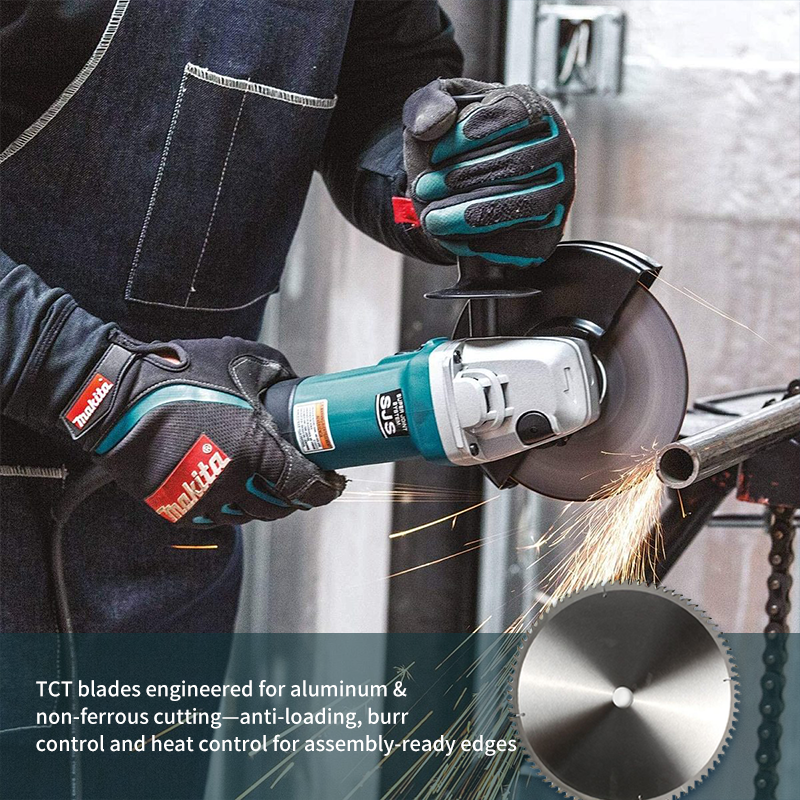
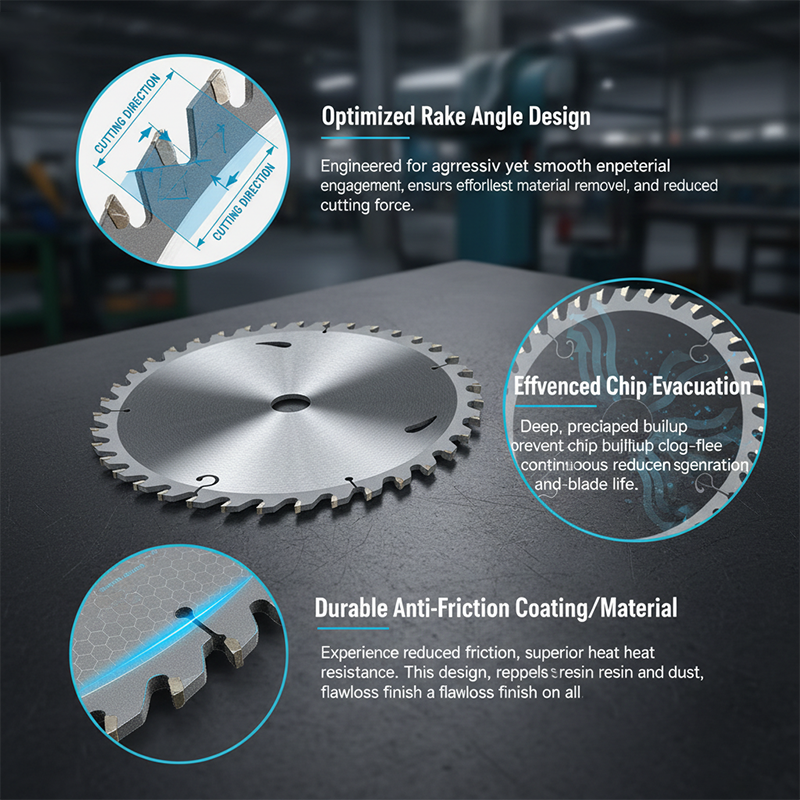
Typical non-ferrous pain points include burrs, galling, chip loading, and high heat. Engineering controls include:
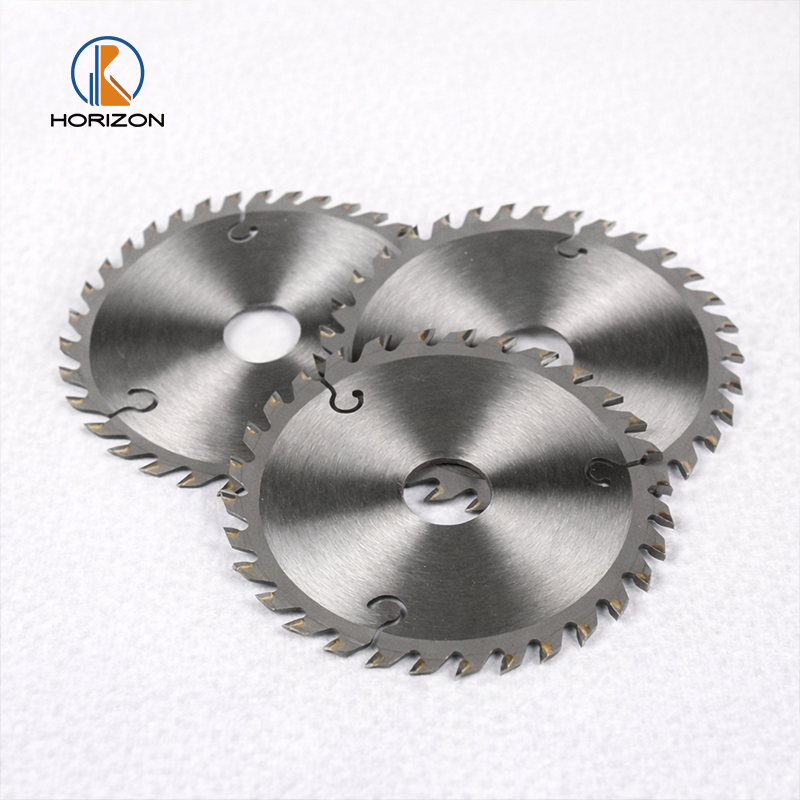
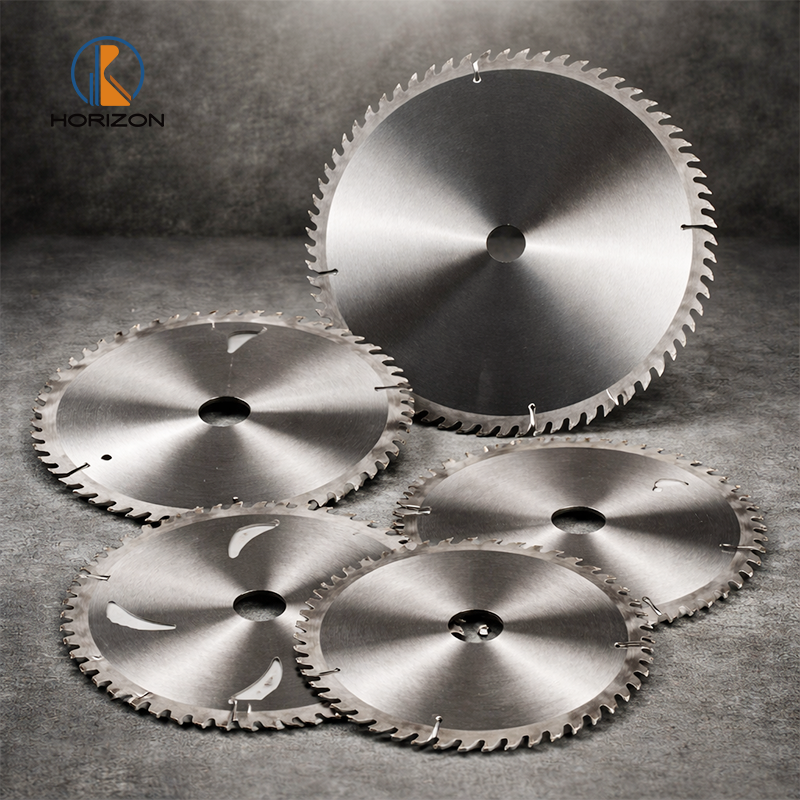
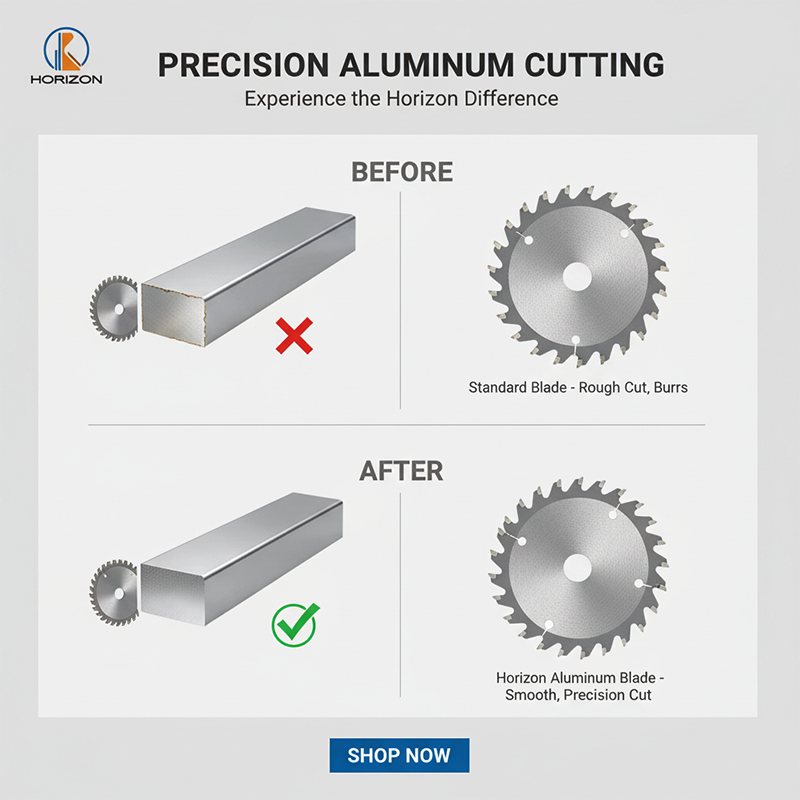
Aluminum/non-ferrous TCT blades target stable cutting with anti-loading behavior, controlled burrs, and controlled heat, reducing secondary deburring and rework before assembly. Compared with wood, aluminum is prone to a chain reaction—chip adhesion → heat → galling → burr growth—so geometry and chip evacuation are engineered for the material.
————————————————————————————————————————————————————————————————————————————————————
|
Specification |
Engineering Notes |
| Tooth Geometry |
Primarily TCG (For burr control); optimized geometries available based on workpiece requirements |
|
Hook Angle |
Neutral or negative hook angle: improves stability, reduces material pulling and “grabbing” |
| Tooth Count |
Configured by diameter and application: balances cut quality with chip evacuation |
|
Kerf |
Stability is priority; Thin kerf requires higher clamping precision and machine stability |
| Anti-loading |
Waxing / Coating / Surface treatments (Optional) + Optimized gullet design |
|
Runout |
Lower is better: Directly affects cut finish, burr formation, and tool life |
| Bore/Arbor |
20 / 25.4 / 30 mm etc. (Bushings/Reducers available) |
|
Materials |
Aluminum extrusions, Plates, copper, Brass, And other non-ferrous metals |
————————————————————————————————————————————————————————————————————————————————————
————————————————————————————————————————————————————————————————————————————————————
The chain is tooth entry → chip formation → chip evacuation. If evacuation fails, chips rub, heat rises, aluminum loads, and galling/burrs grow. Aggressive hook angles can grab the work; runout/clamping issues amplify vibration and inconsistency. Selection must include machine stability and process window.
————————————————————————————————————————————————————————————————————————————————————
————————————————————————————————————————————————————————————————————————————————————
TCG is strong for burr control and stable edges; other grinds may be faster on certain profiles but are more process-sensitive.
Negative hook is more stable and less grabby with better burr control; positive hook can cut faster but increases grabbing/galling risk unless setups are very stable.
Wax/coating/surface treatment plus proper gullet design is an effective package to reduce loading and heat.
————————————————————————————————————————————————————————————————————————————————————
High-frequency processes in aluminum cutting—fenestration, industrial frames, heat sinks, furniture profiles and non-ferrous components
————————————————————————————————————————————————————————————————————————————————————
————————————————————————————————————————————————————————————————————————————————————
OEM/ODM available:
Diameter, bore, tooth count, TCG parameters, hook angle (incl. negative), kerf/plate thickness, slots/damping features, wax/coating (optional), branding/private label packaging, barcodes and assortment kits.
————————————————————————————————————————————————————————————————————————————————————
We translate your customer scenarios—profile thickness, machine platform, burr standard, coolant/lube constraints—into practical SKUs, backed by batch consistency and reliable lead time for repeat orders and reputation.
————————————————————————————————————————————————————————————————————————————————————