Product Positioning
Primary finishing platform when compressed air is limited—optimized for deployment efficiency, power output, and workstation adaptability
This electric series targets workshops and jobsites as a mainstay platform. Where air systems are unavailable or impractical, electric tools deliver stable output with minimal infrastructure—ideal for metal/wood work, paint prep, and maintenance tasks.
————————————————————————————————————————————————————————————————————————————————————
Technical Specifications
Four parameters that drive efficiency and consistency: voltage/power, speed control, spindle interface, dust control & guarding
|
Specification
|
What it means |
| Voltage & plug |
110–120V / 220–240V; must match the target country’s electrical standards.
|
|
Power & load capacity
|
Determines continuous removal rate and the ability to maintain RPM under pressure without stalling. |
| Speed control |
Affects the risk of surface burning, scratch pattern consistency, and the prevention of polishing holograms.
|
|
Spindle/collet
|
M14, 5/8″-11, or collet sizes; determines compatibility with various accessories and consumables. |
| Dust/guard |
Impacts clogging, environmental cleanliness, and overall safety during cutting or grinding operations.
|
————————————————————————————————————————————————————————————————————————————————————
Key Features
Quick setup, wide power coverage, mature accessory ecosystem—ideal for standardized “tool + consumable + process” solutions
- Fast deployment for multi-station and mobile work.
- Full process coverage from removal to final gloss.
- Speed control and standardized accessories support repeatable surface quality.
————————————————————————————————————————————————————————————————————————————————————
Processing Logic
The triangle of removal, control, and finish—tool choice is a trade-off decision
- Angle Grinders / Belt Sanders: Priority on material removal rate and operational efficiency.
- Random Orbital / Square & Delta Sanders: Priority on scratch pattern consistency and handling control.
- Rotary / DA / Mini Polishers: Priority on aesthetic finish and gloss level control.
————————————————————————————————————————————————————————————————————————————————————
Equipment Matching
Power supply, cord/plug, guarding, and extraction set the ceiling
Match voltage/plug to destination market; pair sanding with extraction; use guards/PPE for cutting/grinding; for polishing, match speed window and pad/compound systems.
————————————————————————————————————————————————————————————————————————————————————
Engineering Comparison
Electric vs pneumatic—electric for quick deployment without air; pneumatic for long duty cycle and lower thermal stress
From an engineering standpoint, the key difference is the energy supply method and its impact on load/thermal management:
- Deployment & infrastructure: Electric tools are plug-and-play—ideal for multi-station, mobile, and on-site work. Pneumatic tools require stable air supply, FRL (filter/regulator/lubricator), and hose management—best for fixed stations and production lines.
- Duty cycle & thermal stress: Under prolonged heavy load, pneumatics typically handle heat buildup better, while electric tools rely more on motor cooling design and staying within the right process window (RPM, pressure, duty pattern).
- Torque/RPM behavior: Electric tools are easier to control with constant-speed electronics and deliver predictable output at lower speeds. Pneumatics are great for high-frequency start/stop and long runs but are sensitive to air pressure drops (pressure down → output down).
- Weight, feel & fatigue: Pneumatic tools are often lighter with favorable heat/vibration characteristics (model dependent). Electric tools vary more in weight but can achieve consistent feel through electronic control.
- Total cost & productivity: With a well-built air system, pneumatics often win on stability and long-run economics. Without compressed air—or in distributed sites—electric tools win on low setup threshold and fast deployment.
————————————————————————————————————————————————————————————————————————————————————
Typical Applications & Industries
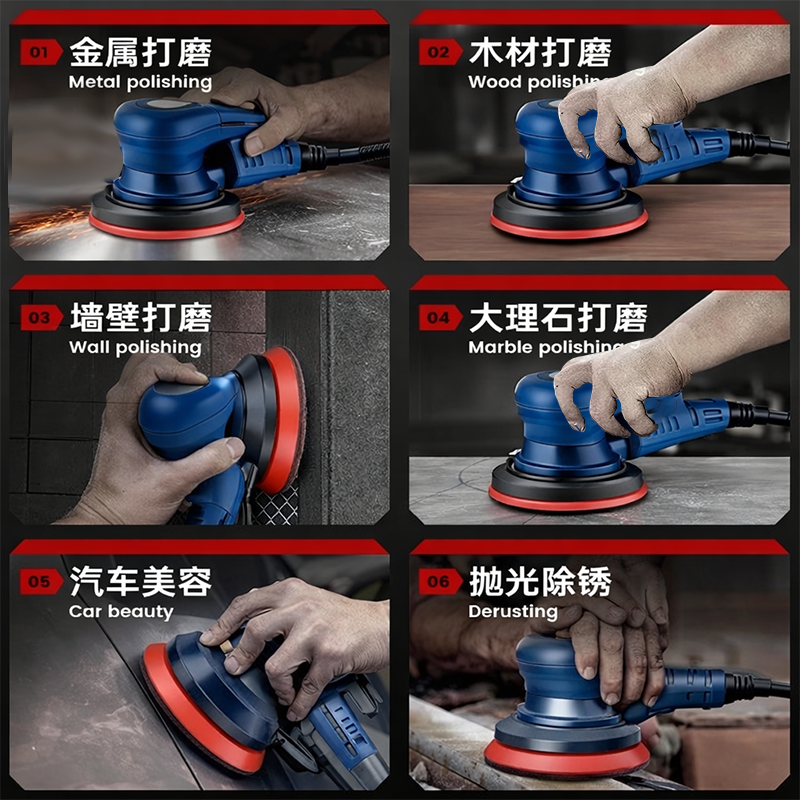
Metal fabrication & welding, woodworking & furniture, auto refinish, equipment maintenance, general surface finishing
- Metal fabrication & welding: weld cleanup, toe blending, spatter removal, deburring/chamfering, rust removal and coating stripping; typical setup is angle grinder + flap/grinding wheels plus die grinders for details.
- Woodworking & furniture: leveling panels, edge finishing, sanding before primer, shaping curves and trims; typical setup is belt sander + random orbital + square/delta finishing sanders.
- Auto refinish & repair: paint removal, filler shaping, primer sanding, paint correction and final gloss; typical setup is random orbital sanders + DA/rotary polishers, with mini polishers for tight edges and spot work.
- Equipment maintenance: on-site repair, corrosion cleanup, edge prep, tight-space work; prioritizes fast deployment and accessory compatibility, often using die grinders/rotary tools with specialized points.
- General surface finishing: standardized removal → leveling → refining → polishing processes across industries; best practice is to grade processes by the “removal–control–finish” triangle and standardize grit/procedure ladders.
————————————————————————————————————————————————————————————————————————————————————
Rane & Recommended Use
One-line guide:
Removal—angle/belt; large uniform sanding—random orbital; edges/corners—square/delta; gloss—DA/rotary; spot finishing—mini
By process goal:
- High removal / roughing: electric angle grinders, electric belt sanders
- Uniform large-area / paint prep: electric random orbital sanders
- Edges & detail finishing: electric square/delta finishing sanders
- Polishing / gloss & correction: electric DA polishers, electric rotary polishers
- Spot finishing / tight zones: mini polishers
common mistakes:
- Ignoring interface
- guard
- disc size, using excessive speed
- pressure, and skipping grit
- process steps—leading to heat damage, deep scratches, and rework.
————————————————————————————————————————————————————————————————————————————————————
Customization (OEM/ODM)
OEM/ODM: branding, nameplate/packaging, kitting, voltage/plug, accessory interfaces and consumable matching
We support OEM/ODM programs designed around target markets, duty cycles, and consumable ecosystems—so customers receive a scalable, repeatable solution:
- Branding & appearance: housing colors, logo printing/labels, consistent series design language.
- Nameplate & compliance info: nameplate content, language versions, serialization, barcode/traceability layout.
- Packaging & collateral: color box/master carton, multi-language manuals and warning labels, retail/e-commerce packaging structures.
- Kitting: process-based tool + consumable kits (e.g., grinder + flap/cut/wire; sander + grit ladder; polisher + pads/wool + compounds).
- Voltage/plug & cord: 110–120V / 220–240V, configured to destination plug and cord specs.
- Accessory interfaces: spindle thread (M14 / 5/8″-11), collet sizes, pad interfaces (H&L/PSA), dust port options and adapters.
- Consumable matching: complete abrasive and polishing system integration with grit ladders, material-specific recommendations, and suggested process windows.
————————————————————————————————————————————————————————————————————————————————————
Why Choose Us
Our advantage is an implementable system: electric tools + abrasives + grit/polishing process
As an abrasives manufacturer, you can connect tools to discs/belts/flap wheels/nonwoven/polishing systems—selling a proven process path, not just hardware.
————————————————————————————————————————————————————————————————————————————————————
Usage & Storage Recommendations
Five essentials: correct voltage, controlled speed, guarding/PPE, dust control, and thermal management
Match voltage
- plug, use correct speed windows, always guard
- PPE for cutting/grinding, prefer extraction for sanding, and manage heat with lighter pressure, correct grit steps, and timely consumable changes.
————————————————————————————————————————————————————————————————————————————————————
Core Product Series
Electric Angle Grinders
Primary high-removal platform for grinding, cutting, deburring, and weld cleanup
Electric angle grinders deliver fast stock removal through high RPM and torque, ideal for weld shaping, deburring, edge chamfering, and cutting. Disc systems (grinding/cutting/flap/wire) define removal rate, heat input, and surface outcome. Proper guards and PPE are mandatory for safe operation.
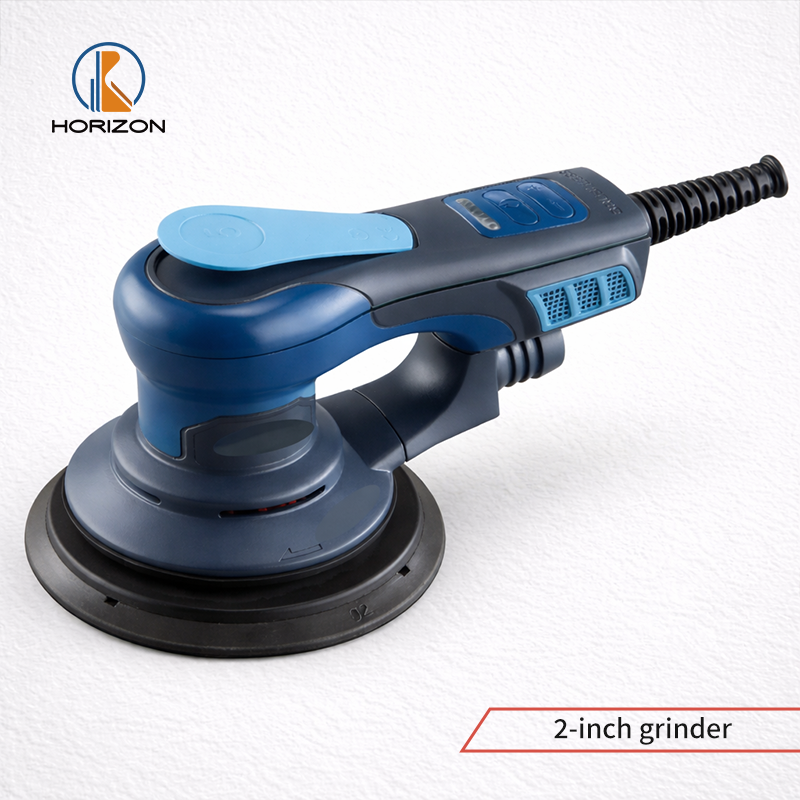
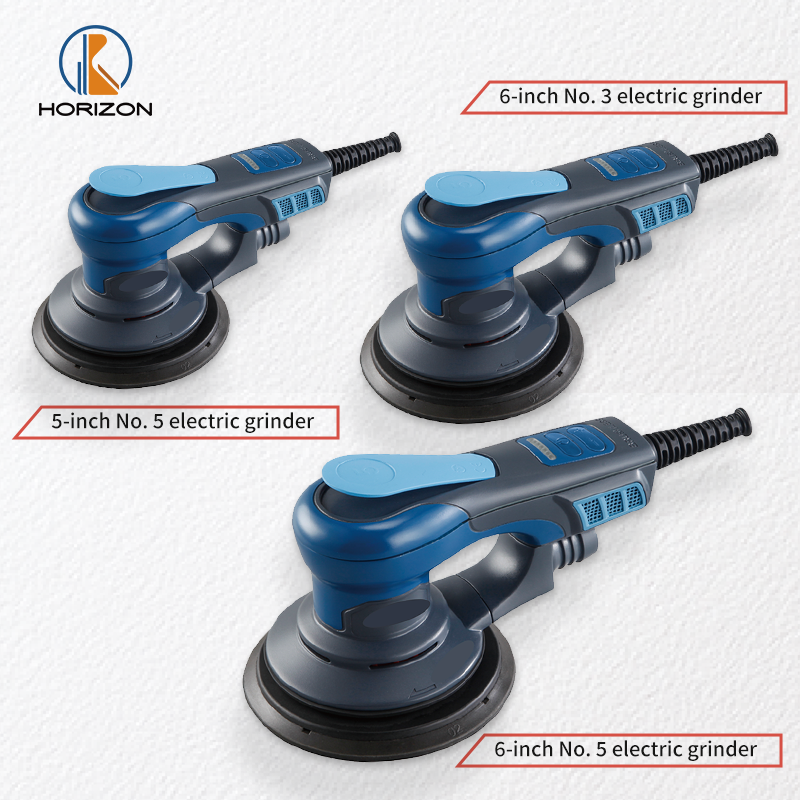
Electric Random Orbital Sanders
Best for uniform large-area sanding and paint prep, with reduced swirl risk and stable consistency
Random orbitals reduce visible swirl patterns via eccentric motion, making them ideal for wood paint prep, automotive refinishing substrate prep, and composite leveling. Key selection factors are orbit size, speed control, and dust extraction—throw affects cut and scratch pattern, while extraction affects loading and re-scratching.
Electric Finishing Sanders (Square/Delta)
Edge/corner finishing and detail work—square for straight-edge uniformity, delta for corner accessibility
These tools focus on clean blending and detail consistency for door frames, trims, inside corners, and profile edges. Compared with random orbitals, they excel at edge control and spot finishing; compared with grinders/belt sanders, they offer more controlled scratch and smoother transitions. Abrasive interface (H&L/PSA), pad compliance, and extraction strongly influence final consistency.
Electric Belt Sanders
High-removal and fast leveling tool for large surfaces, weld leveling, and productivity in rough stages
Belt sanders provide continuous cutting with high removal rates—ideal for leveling wood panels, trimming boards, and rapid weld leveling. Selection should consider belt size, tension mechanism, speed range, and cooling. Process control depends on consistent feed, stable belt tension, and correct grit stepping to avoid waves, burn marks, and loading.
Electric Die Grinders / Rotary Tools
Tight-space precision platform using collets and rotary accessories for engraving, deburring, and internal work
Die grinders/rotary tools excel in access and fine control for internal holes, grooves, weld roots, and mold edges. Accessory systems (stones, burrs, rubberized points, polishers) define capability. Key factors are RPM stability, collet size, runout, and cooling—stability often matters more than peak speed in prolonged detail work.
Electric Rotary Polishers
Fast defect correction and high-gloss tool with strong cut—requires higher skill and thermal management
Rotary polishers deliver strong cut and fast correction via direct rotation, suitable for deeper defects and high-gloss restoration. Risks include concentrated heat and holograms—requiring correct speed windows, pad/compound matching, edge pressure control, and section-by-section workflow. Best for professional stations prioritizing speed.
Electric Dual Action Polishers
Safer, more consistent finishing with lower hologram risk—ideal for production and beginners
DA polishers combine rotation with eccentric motion to reduce heat concentration and holograms, making them ideal for production consistency, post-paint correction, and final finishing. Key factors are throw size, RPM stability, and vibration control. Process success relies on controlled cut levels, progressive refinement, and dust/heat management.
Mini Polishers
Dedicated for spot correction and small areas—better control and heat management on edges, curves, and tight zones
Mini polishers improve control through smaller pad sizes and better maneuverability—ideal for edges, curves, profiles, and spot repairs. They often complement DA/rotary systems: main machines handle large areas for speed, while minis refine tight zones for quality and consistency. Selection focuses on pad range, body size, speed window, and accessory compatibility.