
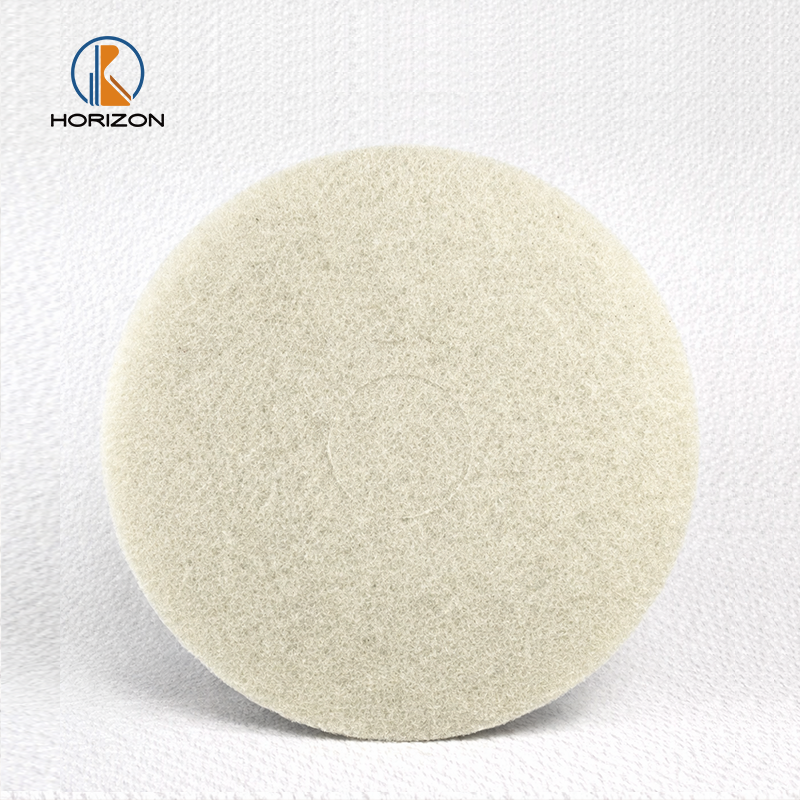
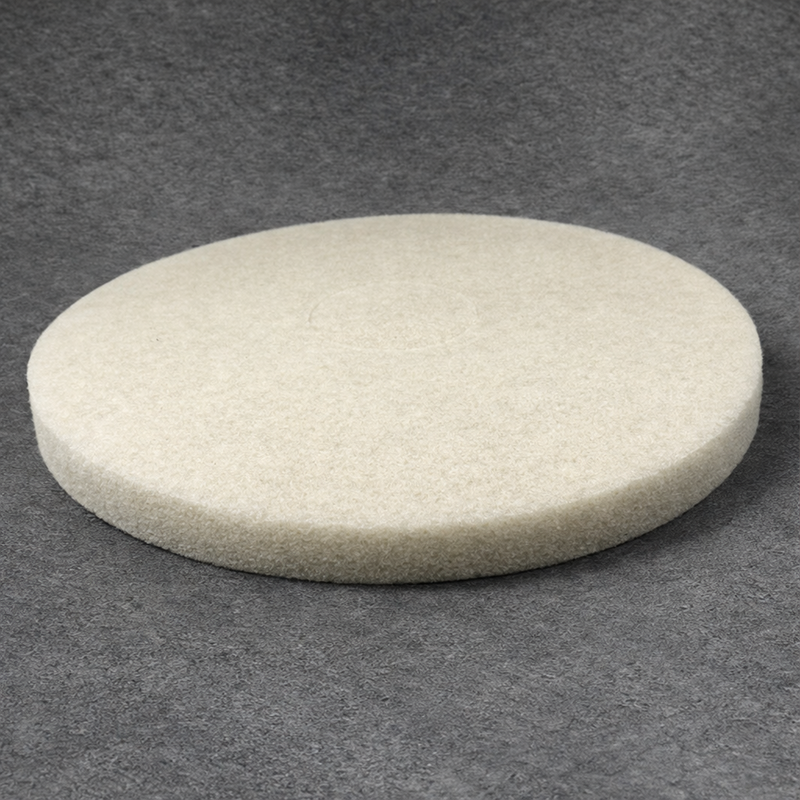
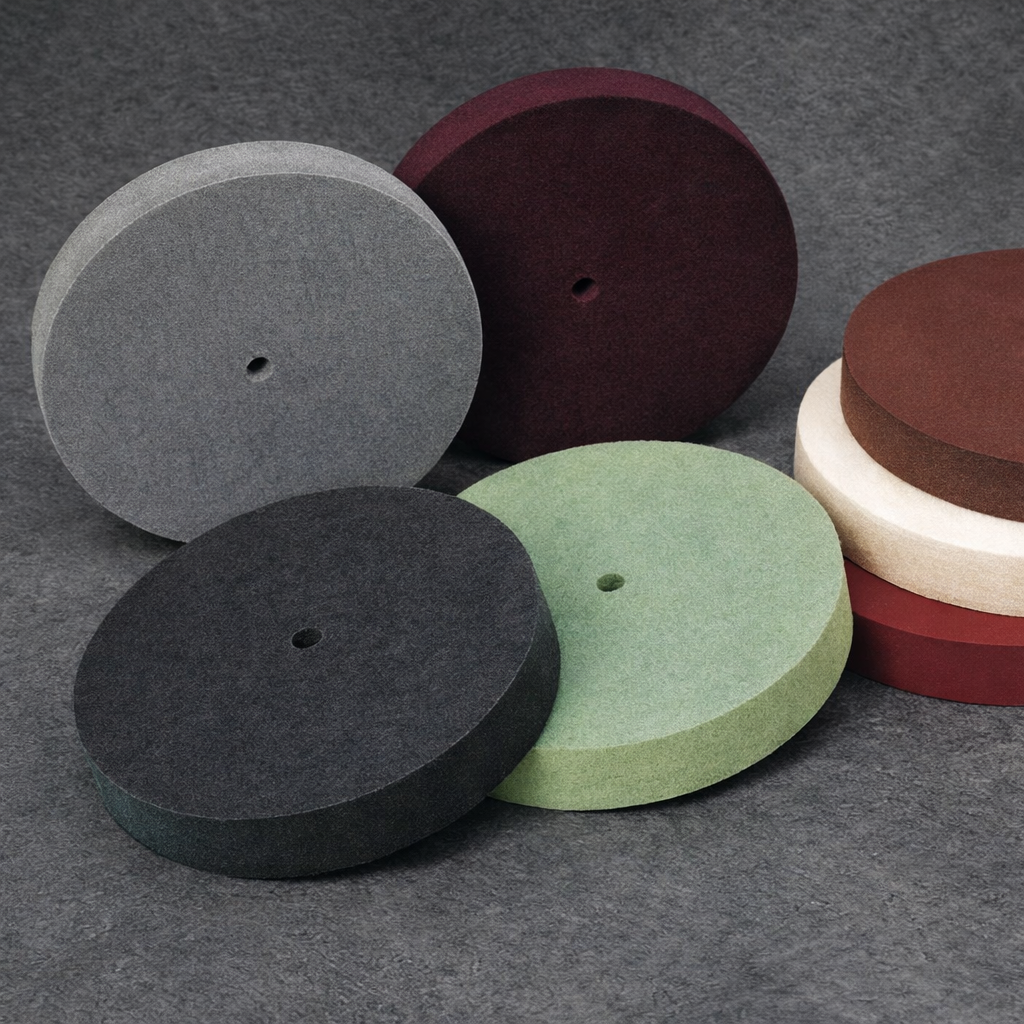
Nonwoven polishing pads use an open-web nonwoven structure with tighter control of density, thickness, and abrasive impregnation to deliver:
They can be produced as discs, sheets, rolls, or laminated into machine-use pads.
Nonwoven polishing pads are positioned as pre-polish and texture-control media in finishing processes, optimized for low heat, low gouging risk, and consistent surface texture—used for refining, blending, light film removal, and preparing surfaces before polishing.
Compared with scouring pads, they behave more like process-grade conditioning pads: typically finer, more stable in texture output, and better for cosmetic consistency—widely used on stainless, aluminum, and hardware components.
————————————————————————————————————————————————————————————————————————————————————
|
Item |
Specification |
| Product Type |
Non-woven Polishing Pads / Scouring Pads |
|
Material |
Non-woven fiber web + Premium abrasive system |
| Format |
Discs / Sheets / Rolls / Laminated Pads |
|
Grades |
Coarse / Medium / Fine / Very Fine |
| Dimensions |
Fully customizable to client specifications |
|
Abrasive Grain |
Aluminum Oxide (AO) / Silicon Carbide (SC), etc. |
| Thickness/Density |
Adjustable thickness and density options available |
|
Max RPM |
Marked according to product format and safety standards |
————————————————————————————————————————————————————————————————————————————————————
|
Comparison |
Nonwoven Polishing Pads | Scouring Pads |
| Primary intent | pre-polish prep/blending |
cleaning/oxide removal |
|
Texture consistency |
★★★★★ | ★★★★ |
| Cleaning strength | ★★★ |
★★★★★ |
|
Typical grades |
finer/finishing | wide range (coarse–fine) |
| Cosmetic suitability | ★★★★★ |
★★★★ |
|
Process stage |
fine sand → polish |
clean → condition → next |
————————————————————————————————————————————————————————————————————————————————————
The operating logic is surface conditioning:
————————————————————————————————————————————————————————————————————————————————————
Too coarse leaves visible texture; too fine reduces productivity—grade must match the process target
————————————————————————————————————————————————————————————————————————————————————
Use: hand application with holders; polishers/sanders/conditioning machines depending on format
————————————————————————————————————————————————————————————————————————————————————
————————————————————————————————————————————————————————————————————————————————————
Nonwoven polishing pads are specified by grades (Coarse/Medium/Fine/Very Fine) or finish outcomes:
————————————————————————————————————————————————————————————————————————————————————
OEM/ODM supported:
Nonwoven density/thickness, abrasive system and grades, color coding, disc/sheet/roll sizing, laminated backings (hook & loop/PSA/fiber backings), and private label/packaging—engineered for target finish outcomes (gloss, texture coarseness, reflection uniformity) and takt time.
————————————————————————————————————————————————————————————————————————————————————
Pre-polish work must be repeatable:
Nonwoven density and grade stability determine texture uniformity; abrasive distribution and bonding stability define productivity and wear curve. We engineer for batch consistency to reduce streak variation and rework.
————————————————————————————————————————————————————————————————————————————————————
Use medium to low pressure with stable speed and continuous movement; avoid over-compressing the nonwoven which causes uneven texture and heat
Before polishing, ensure deep scratches are within acceptable limits, then use pads to unify texture
Clean dust/residue after use to prevent secondary scratching and streak variation
Store dry and shaded; avoid moisture and compression that can change density; reseal after opening