
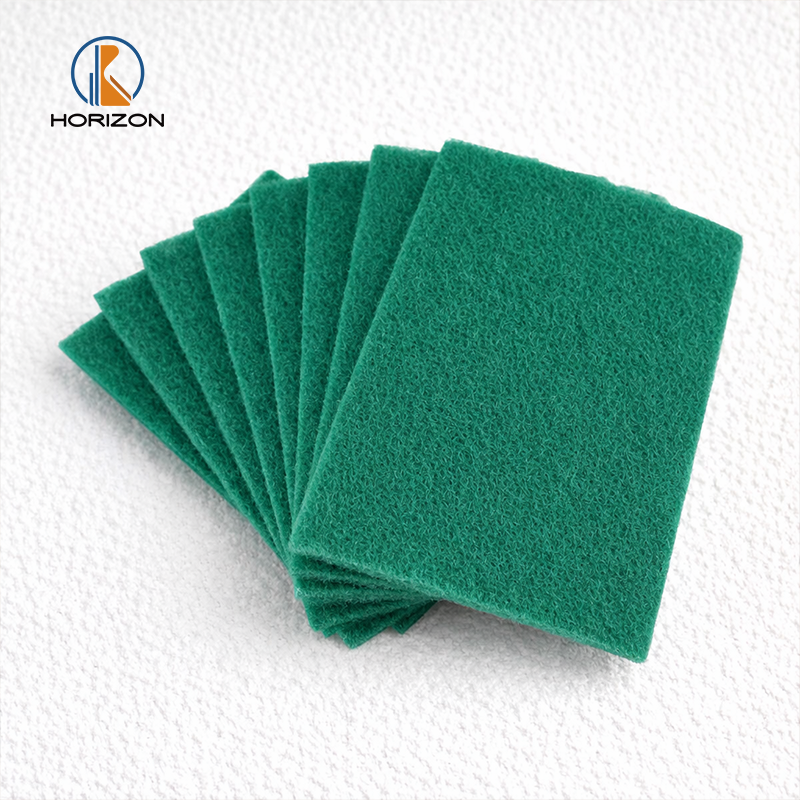
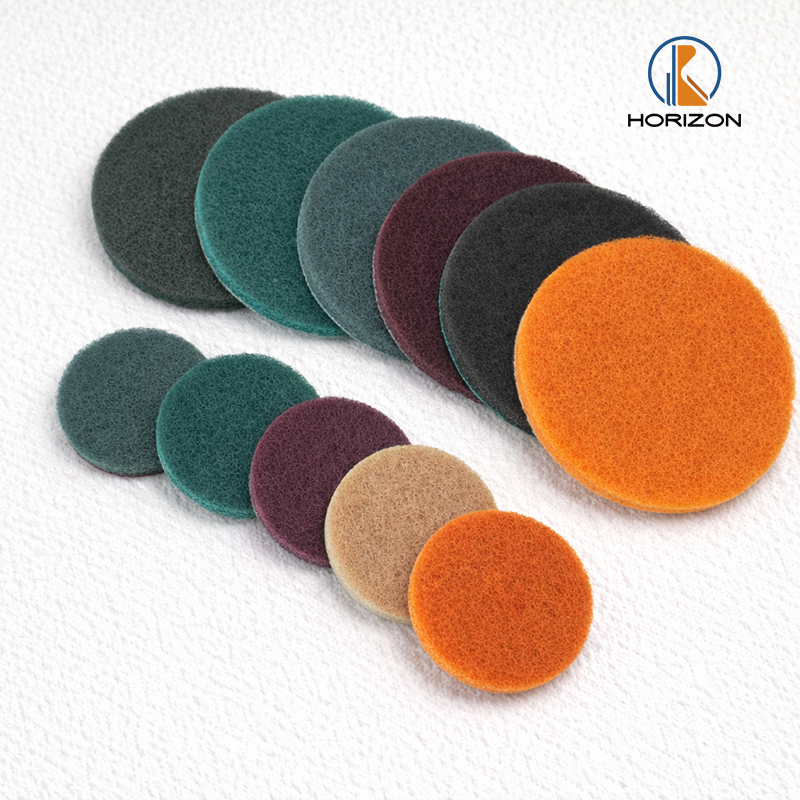
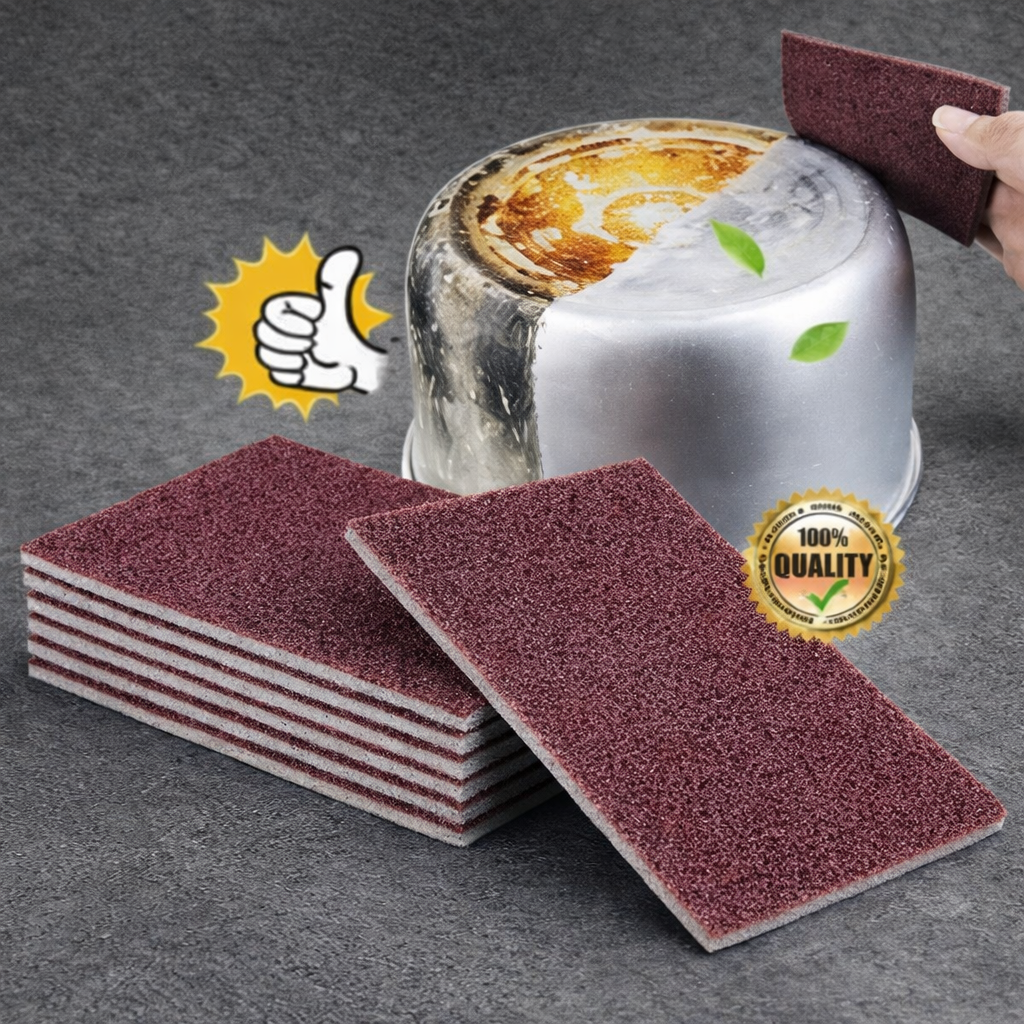
Scouring pads are made from an open-web nonwoven fiber structure, often impregnated/coated with abrasives (commonly aluminum oxide or silicon carbide).
The open structure provides:
They typically offer good water/chemical tolerance depending on formulation.
Scouring pads are positioned as cleaning-oriented surface conditioning abrasives, designed for low gouging risk, low heat impact, and controllable texture—used for cleaning, light oxide removal, brushing/unifying scratch patterns, light pre-coating abrasion, and maintenance.
They focus on surface conditioning rather than heavy stock removal, making them suitable for cosmetic parts, thin sheet, and complex profiles. They are widely used on stainless steel, aluminum, copper, and coated surfaces.
————————————————————————————————————————————————————————————————————————————————————
|
Item |
Specification |
| Product Type |
Industrial Scouring Pads / Surface Conditioning Pads |
|
Material |
High-quality non-woven web + Premium abrasive system |
| Format |
Individual Sheets / Bulk Rolls / Pad-holder compatible options |
|
Grades |
Coarse / Medium / Fine (Custom grit ranges available) |
| Dimensions |
Custom sizes tailored to specific requirements |
|
Abrasive Grain |
Aluminum Oxide (AO) / Silicon Carbide (SC), etc. |
| Color Options |
Customized color-coding by grade (Standard or Bespoke) |
|
Packaging |
Custom OEM packaging and private labeling available |
————————————————————————————————————————————————————————————————————————————————————
|
Comparison |
Scouring Pads | Nonwoven Polishing Pads | Sandpaper |
| Cleaning power | ★★★★★ | ★★★ |
★★ |
|
Light oxide/film removal |
★★★★ | ★★★ | ★★★ |
| Texture consistency | Excellent |
Excellent |
Medium–Good |
|
Stock removal |
Low | Low | Medium–High |
| Loading risk | Low |
Low |
Medium |
————————————————————————————————————————————————————————————————————————————————————
Scouring pads work through fiber-based micro-abrasion and brushing, not heavy cutting:
They are commonly used as a transition step: cleaning/oxide removal → texture unification → polishing or coating.
————————————————————————————————————————————————————————————————————————————————————
————————————————————————————————————————————————————————————————————————————————————
————————————————————————————————————————————————————————————————————————————————————
Stainless cleaning, fingerprint/light oxide removal, brushed texture unification
Aluminum/copper oxide film removal and surface conditioning
Pre-coating cleaning and light abrasion
Industrial maintenance: equipment cleaning, degreasing assistance, adhesive residue removal
Cosmetic maintenance of hardware and decorative parts (grade-dependent)
————————————————————————————————————————————————————————————————————————————————————
Scouring pads are commonly specified by grade/color (market-dependent):
————————————————————————————————————————————————————————————————————————————————————
OEM/ODM supported:
Nonwoven density/thickness, abrasive system and grades, color coding system, sheet/roll sizing, holder-compatible formats, private label/packaging and kit programs—engineered for target cleaning strength, texture, and durability.
————————————————————————————————————————————————————————————————————————————————————
Although simple in appearance, performance depends on grade consistency:
Nonwoven density, abrasive distribution, and bonding stability determine cleaning strength, texture coarseness, and durability. We control materials and process for batch stability, delivering repeatable cleaning and brushing results.
————————————————————————————————————————————————————————————————————————————————————
Choose grade by goal: coarse/medium for cleaning/oxide removal, fine/very fine for cosmetic maintenance