
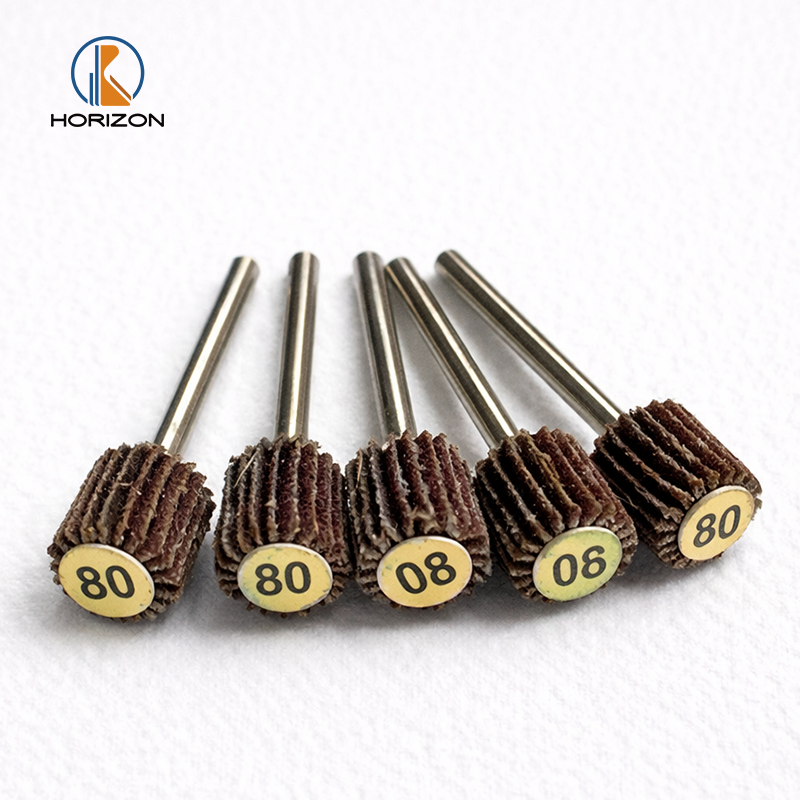
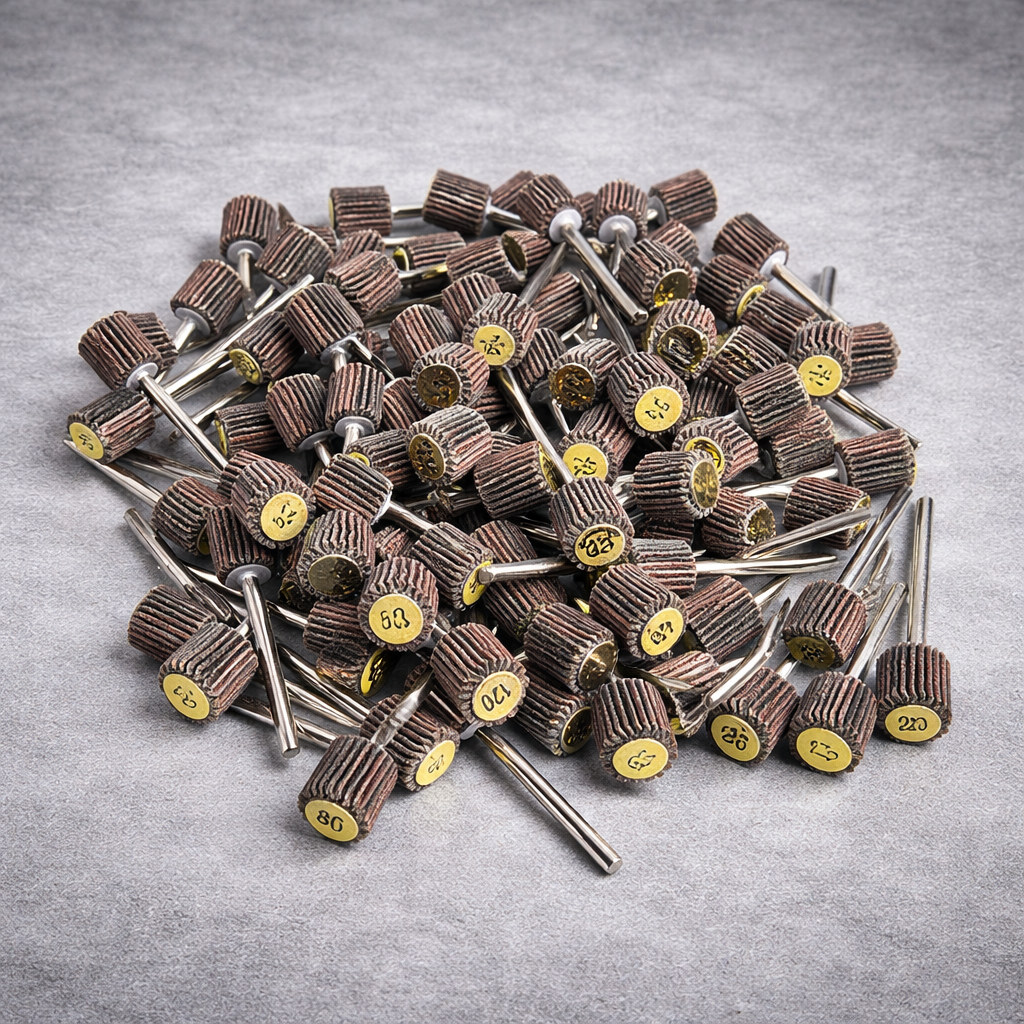
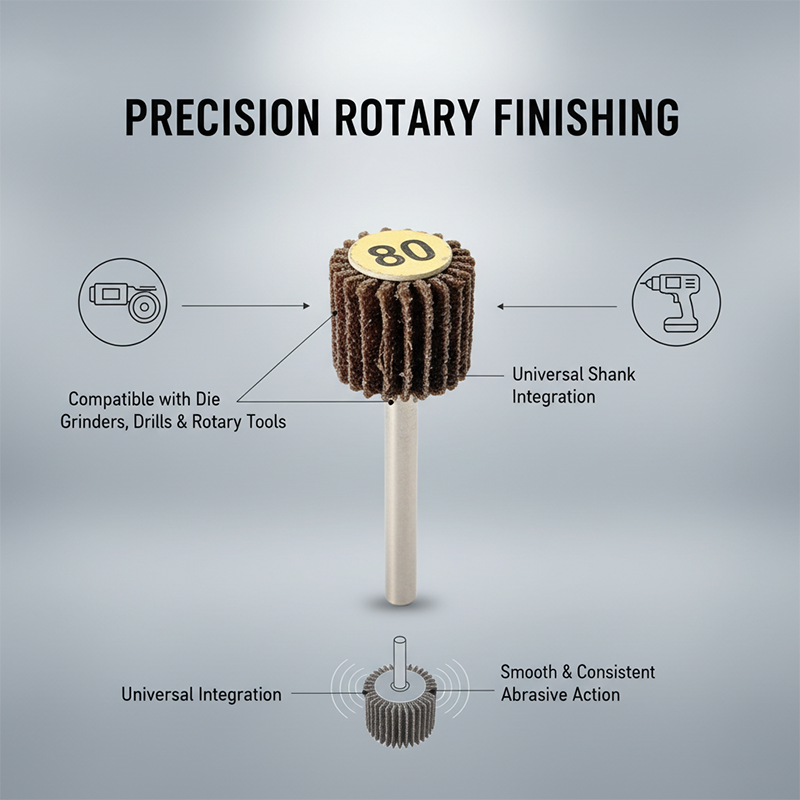
Цилиндрические лепестковые круги состоят из радиально расположенных абразивных лепестков вокруг цилиндрического сердечника и обычно устанавливаются через посадочное отверстие на финишные станки или специальные оправки.
Их «податливый» контакт обеспечивает снятие заусенцев, выравнивание риски, блендинг швов и доводку поверхности с хорошей «прощаемостью», не вызывая чрезмерного изменения размеров детали.
Цилиндрические лепестковые круги позиционируются как инструменты для доводки поверхности и блендинга с акцентом на равномерную риску и плавные переходы.
По сравнению с лепестковыми кругами на оправке они имеют большую площадь контакта и более ровный «ритм» процесса; по сравнению с лепестковыми дисками для УШМ лучше подходят для стабильной финишной обработки плоскостей, наружных (OD) и внутренних (ID) диаметров и профилированных поверхностей.
—————————————————————————————————————————————————————————————————————————————————————————-
|
Параметр |
Спецификация |
|
Тип продукта |
Цилиндрические лепестковые круги |
| Абразив |
Варианты абразива: AO / zirconia / ceramic |
|
Конструкция |
Радиальная лепестковая конструкция |
| Наружный диаметр |
Наружный диаметр 3/4″–12″ (20–300 мм) (возможно расширение) |
|
Ширина |
Ширина 3/8″–8″ (10–200 мм) (возможно расширение) |
| Посадочное отверстие |
Посадочное отверстие 1/4″–2″ (на заказ) |
|
Диапазон зернистости |
P60–P240 (возможно расширение) |
| Макс. об/мин (Max RPM) |
Маркировка по размеру и стандарту |
—————————————————————————————————————————————————————————————————————————————————————————-
Цилиндрические лепестковые круги формируют стабильную текстуру за счёт податливого контакта:
Поэтому их часто используют для блендинга после сварки, переходов под «сатин/шлифованный» финиш, снятия заусенцев и лёгкого притупления кромки.
—————————————————————————————————————————————————————————————————————————————————————————-
Чрезмерный прижим или задержка на месте могут привести к перегреву и неравномерному износу — требуется стабильная подача
—————————————————————————————————————————————————————————————————————————————————————————-
—————————————————————————————————————————————————————————————————————————————————————————-
|
Сравнение |
Цилиндрические лепестковые круги | Шлифовальные ленты | Нетканые круги |
| Способность к съёму материала | Низкий–средний | Высокая |
Низкая |
|
Стабильность риски |
Отличный | Хорошая (зависит от режимов) | Отличный |
| Блендинг | Отличный | Среднее–хорошее |
Отличный |
|
Влияние на размеры |
Низкая | Средний | Очень низкое |
| Типичное применение | Сатинирование/блендинг/снятие заусенцев | Выравнивание/съём |
Доводка/текстура |
—————————————————————————————————————————————————————————————————————————————————————————-
—————————————————————————————————————————————————————————————————————————————————————————-
—————————————————————————————————————————————————————————————————————————————————————————-
OEM/ODM: стандарты наружного диаметра/ширины/посадки, плотность и жёсткость лепестков, угол укладки, абразивная система, материал сердечника и класс балансировки, упаковка и private label — инженерно под производственный такт и целевую текстуру.
—————————————————————————————————————————————————————————————————————————————————————————-
Для стабильного финиша необходимы: динамическая балансировка, равномерная укладка лепестков, контроль системы связки и стабильность партий.Балансировка влияет на вибрации и равномерность риски; укладка и связка задают кривую износа.Мы проектируем под производственную стабильность, чтобы финиш был воспроизводимым.
—————————————————————————————————————————————————————————————————————————————————————————-